
Bali Traffic Tips: How to Avoid Traffic Jams During Your Holiday
Planning a holiday in Bali is exciting, but traffic congestion can sometimes make getting around the island more challenging than expected. These Bali Traffic Tips will help you choose better travel times, plan your sightseeing routes, and avoid unnecessary delays during your stay.
Bali is famous for its beautiful beaches, traditional villages, rice terraces, waterfalls, and cultural attractions. However, popular tourist areas such as Canggu, Seminyak, Kuta, and Ubud can experience heavy traffic, particularly during busy travel periods.
Even a relatively short journey may take longer than expected because of narrow roads, busy intersections, roadworks, local ceremonies, and the high number of motorcycles.
The good news is that a little preparation can make your holiday much more enjoyable. By understanding local traffic patterns and choosing the right transportation, you can spend less time on the road and more time exploring Bali.
Why Is Traffic So Busy in Bali?
Before learning how to avoid traffic jams, it helps to understand why congestion happens in the first place.
Bali has a growing number of visitors, especially in popular destinations across the southern part of the island. At the same time, many tourist attractions, restaurants, hotels, and villas are connected by relatively narrow roads.
Unlike major cities with extensive public transportation networks, many parts of Bali depend heavily on private cars, motorcycles, taxis, and tourist vehicles.
Here are some common reasons for traffic congestion.
1. Narrow Roads in Tourist Areas
Many popular destinations have small roads that were originally designed for local communities rather than large numbers of tourist vehicles.
This is particularly noticeable in Canggu, Ubud, and some areas around Seminyak. When cars, motorcycles, delivery vehicles, and pedestrians share limited road space, traffic can move slowly.
2. Increasing Tourist Activities
Popular restaurants, beach clubs, shopping areas, and tourist attractions attract visitors throughout the day.
Areas such as Batu Bolong, Berawa, Petitenget, and central Ubud can become crowded when several attractions experience high visitor numbers at the same time.
3. Religious Ceremonies and Local Events
Balinese Hindu ceremonies are an important part of local culture. During certain religious celebrations, traditional processions may use public roads.
These events can temporarily affect traffic flow, particularly in villages and areas near temples.
Visitors should remain patient and respectful when encountering a religious procession.
4. Roadworks and Traffic Management
Road maintenance, construction projects, and traffic management changes can also affect travel times.
For example, the Badung Transportation Department has reported traffic engineering measures in Seminyak and Kerobokan Kelod, with further attention given to congestion around Berawa and Canggu.
Travelers should therefore avoid relying entirely on old route recommendations.
Bali Traffic Tips: Best Times to Travel Around Bali
One of the easiest ways to reduce travel delays is to choose the right departure time.
Although traffic conditions can change depending on the day, weather, and local activities, certain periods are generally busier than others.
Here is a practical guide to help plan your daily activities.
| Time | General Traffic Conditions |
|---|---|
| 5:00 AM – 7:00 AM | Usually quieter |
| 7:00 AM – 9:00 AM | Morning commuter traffic |
| 9:00 AM – 11:00 AM | Often more manageable |
| 11:00 AM – 2:00 PM | Variable, depending on location |
| 3:00 PM – 6:00 PM | Often busy, especially in southern Bali |
| 6:00 PM – 8:00 PM | Busy around restaurants and entertainment areas |
| After 8:00 PM | Some areas become quieter |
These are general planning guidelines rather than fixed traffic predictions.
Travel Early in the Morning
If you plan to visit popular attractions such as Mount Batur, Lempuyang Temple, or Ulun Danu Beratan Temple, an early departure can make a significant difference.
Morning trips also give you more time to explore before afternoon congestion develops.
For example, travelers visiting Ubud from Seminyak may benefit from leaving early rather than starting their journey around lunchtime.
Avoid Busy Afternoon Travel
Late afternoon is often challenging in southern Bali because residents return home while tourists travel to restaurants, beaches, and sunset locations.
If possible, finish longer journeys before this period or schedule relaxing activities near your accommodation.
Plan Around Sunset
Sunset is one of the busiest sightseeing periods in Bali, particularly around Uluwatu, Jimbaran, and Seminyak.
If you want to enjoy a sunset restaurant or beach club, allow extra travel time and consider arriving earlier.
Bali Traffic Tips for Popular Tourist Areas
Traffic conditions are not the same everywhere in Bali. Some destinations have narrow roads and limited alternative routes, while others experience congestion mainly during peak visitor hours.
Understanding the characteristics of each area can help you create a more realistic itinerary.
1. Canggu
Canggu is one of the most popular destinations for international visitors. It is known for surfing beaches, cafés, restaurants, and beach clubs.
However, roads around Batu Bolong, Berawa, and Pererenan can become crowded, especially during late afternoon and evening hours.
Travel tips for Canggu:
Visit popular cafés earlier in the morning.
Avoid unnecessary short car trips during busy periods.
Allow additional time when travelling between Batu Bolong and Berawa.
Choose accommodation close to the places you plan to visit frequently.
If you are staying in Canggu, consider exploring nearby attractions on the same day rather than travelling across the island several times.
2. Seminyak
Seminyak is famous for shopping, restaurants, luxury villas, and beach clubs.
Traffic can become particularly busy around Petitenget, Kayu Aya, and Sunset Road.
Travel tips for Seminyak:
Walk when visiting nearby restaurants and shops.
Avoid driving around dinner time if your destination is close.
Check current traffic conditions before travelling to another tourist area.
Allow extra time for airport transfers during busy periods.
Some roads in Seminyak also have traffic management arrangements, so follow local signs and instructions rather than relying only on previously saved directions.
3. Ubud
Ubud attracts visitors interested in Balinese culture, traditional markets, rice terraces, temples, and waterfalls.
Central Ubud can become congested, particularly around Monkey Forest Road, Ubud Palace, and popular market areas.
Travel tips for Ubud:
Start sightseeing early in the morning.
Visit attractions outside central Ubud before returning to town.
Avoid scheduling too many distant attractions in one day.
Use designated parking areas when visiting popular destinations.
A practical option is to combine nearby attractions such as Tegalalang Rice Terrace, Tirta Empul Temple, and nearby coffee plantations in one itinerary.
4. Kuta and Legian
Kuta and Legian are popular with visitors who enjoy beaches, shopping, nightlife, and convenient access to the airport.
Traffic can increase around shopping streets and entertainment areas, particularly in the evening.
Travel tips for Kuta and Legian:
Walk to nearby attractions whenever practical.
Leave earlier when travelling to the airport.
Avoid scheduling long-distance trips during evening peak periods.
Check your pickup location carefully because some streets can be difficult for larger vehicles.
5. Uluwatu
Uluwatu is known for its dramatic cliffs, beautiful beaches, surf spots, and sunset attractions.
Some beach access roads are narrow, and popular destinations can have limited parking.
Travel tips for Uluwatu:
Start your beach visits earlier in the day.
Allow extra time for Uluwatu Temple and Kecak Dance performances.
Combine nearby beaches in one trip.
Avoid leaving your return journey until the last minute after sunset.
How to Plan Your Bali Itinerary to Avoid Traffic
A well-organized itinerary can save more time than simply choosing a faster vehicle.
Many first-time visitors underestimate the distances between destinations. On a map, two attractions may appear close together, but actual travel times can be affected by road conditions and traffic.
The best approach is to organize your sightseeing by geographical area.
1. Group Nearby Attractions Together
Instead of visiting destinations on opposite sides of Bali on the same day, focus on one region.
For example:
Ubud Day Trip
Tegalalang Rice Terrace
Tirta Empul Temple
Coffee plantation
Tegenungan Waterfall
East Bali Day Trip
Lempuyang Temple
Tirta Gangga Water Palace
Taman Ujung
Virgin Beach
South Bali Day Trip
Garuda Wisnu Kencana Cultural Park
Padang Padang Beach
Uluwatu Temple
Jimbaran Beach
This approach reduces unnecessary driving and makes your sightseeing experience more comfortable.
2. Do Not Schedule Too Many Attractions
Trying to visit six or seven distant attractions in one day may look attractive when planning your holiday.
However, it can quickly become tiring when you include travel time, parking, entrance tickets, meals, and walking between attractions.
Three or four well-selected destinations are often enough for a comfortable sightseeing day, depending on their locations.
3. Allow Extra Travel Time
Avoid planning your itinerary with very tight schedules.
Traffic conditions can change unexpectedly, and some attractions require additional time for parking or walking.
If you have a restaurant reservation, boat departure, or scheduled activity, leave a reasonable buffer.
For example, when travelling to Sanur Harbour for a fast boat, allow extra time rather than arriving just before departure.
4. Check Traffic Before Leaving
Navigation applications such as Google Maps can help you understand current traffic conditions and compare available routes.
Check the estimated journey time before departure and again if conditions change.
However, remember that navigation applications may not always reflect temporary road closures, local ceremonies, or restrictions immediately.
Bali Traffic Tips: Choosing the Right Transportation
Choosing suitable transportation is another important part of planning your holiday.
Bali offers several ways to get around, but the best option depends on your destination, travel distance, budget, and group size.
Motorcycle or Scooter
Motorcycles are common in Bali and can be convenient for short journeys.
They are particularly useful for experienced riders who understand local traffic conditions.
However, visitors should not assume that riding a scooter is automatically the easiest way to avoid congestion.
Before renting one, make sure you have the appropriate driving licence and insurance coverage. Always wear a proper helmet and follow local traffic regulations.
Online Transportation Services
Ride-hailing services can be useful for short trips, particularly around popular tourist areas.
They are convenient when you need transportation to nearby restaurants, shopping areas, or beaches.
However, availability and pickup arrangements can vary depending on location. Some tourist attractions and designated areas may also have local transportation arrangements.
Private Car with Driver
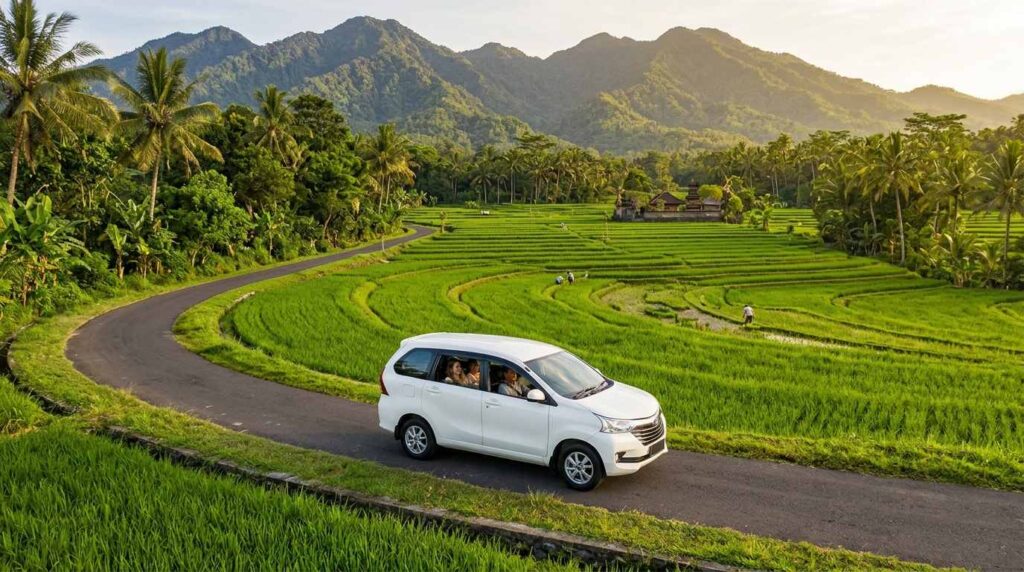
For families, couples, and groups planning to visit several attractions in one day, hiring a private car with a local driver can be a comfortable option.
A local driver is familiar with the island, understands common traffic patterns, and can help organize a practical sightseeing route.
You also avoid the responsibility of navigating unfamiliar roads, finding parking, and managing the journey yourself.
If you are planning a full-day sightseeing trip, you can explore our Private Driver Bali service to learn more about transportation options around the island.
Common Mistakes Tourists Make When Travelling Around Bali
Even experienced travelers can make planning mistakes when visiting a new destination.
Here are some common problems that can make your Bali holiday more stressful.
1. Underestimating Travel Time
A short distance does not always mean a short journey.
Always check the estimated travel time rather than judging the distance based on kilometers alone.
2. Visiting Too Many Places in One Day
Trying to cover the entire island in a single day can result in spending more time in the car than enjoying the attractions.
Choose destinations within the same region whenever possible.
3. Leaving During Peak Hours
Starting a long journey during busy afternoon traffic can affect the rest of your itinerary.
Consider leaving earlier or adjusting your sightseeing schedule.
4. Ignoring Parking Conditions
Some popular beaches, restaurants, and attractions have limited parking spaces.
Check parking arrangements before visiting, particularly if you are travelling with a larger vehicle.
5. Not Considering Local Events
Religious ceremonies, public holidays, and community activities can temporarily affect traffic.
Check local information before setting off, especially when visiting temples or traditional villages.
Useful Apps for Checking Bali Traffic
Technology can make travelling around Bali easier when used properly.
Here are some useful applications to consider before your holiday.
Google Maps
Google Maps is useful for checking estimated journey times, finding attractions, and comparing alternative routes.
You can also save important destinations before travelling.
Waze
Waze provides navigation information and traffic reports from other road users.
It can be helpful when travelling through busy areas, although not every local road or temporary restriction will necessarily be shown.
Ride-Hailing Applications
Applications such as Gojek and Grab can help you arrange transportation for short trips where their services are available.
Download the applications before your holiday and check the available payment options.

Is Hiring a Private Driver in Bali Worth It?
For visitors planning to explore several destinations, hiring a private driver can make the journey easier and more organized.
Instead of worrying about directions, unfamiliar roads, or parking, you can focus on enjoying your holiday.
A local driver can also help you decide which attractions are practical to visit together and suggest adjustments when traffic becomes heavier than expected.
This is especially useful for:
Families travelling with children.
Couples planning a full-day sightseeing trip.
Groups visiting multiple attractions.
Visitors travelling with luggage.
Tourists who are unfamiliar with Bali’s road conditions.
A private driver does not eliminate traffic congestion, but proper route planning and local knowledge can help make your journey more comfortable.
For a more convenient holiday, you can arrange a private car with an English-speaking local driver through Private Driver Bali.
Final Thoughts: Enjoy Bali Without Rushing
Traffic congestion is part of travelling in a popular destination like Bali, but it does not have to ruin your holiday.
By following these Bali Traffic Tips, you can make better travel decisions, avoid unnecessary journeys, and organize your sightseeing activities more efficiently.
Remember to start early when visiting popular attractions, group nearby destinations together, check traffic conditions before departure, and allow extra time for important journeys.
Following these practical Bali Traffic Tips will help you enjoy a more relaxed holiday while exploring Bali’s beautiful destinations
Most importantly, do not try to rush through every destination. Bali has plenty to offer, and enjoying a few places at a comfortable pace is often better than spending your entire day travelling between attractions.
If you need comfortable transportation during your stay, consider arranging a private driver who understands the local roads and can help plan your journey.
Planning your Bali holiday? Contact Private Driver Bali to arrange a comfortable private car and explore the island at your own pace.