

Bali Cash or Card: ATM, Credit Card and Cash Tips
Planning a holiday in Bali often comes with an important question: should you bring cash or rely on your credit card? Understanding Bali Cash or Card payment options can help you manage your holiday budget, avoid unnecessary fees, and make everyday purchases more convenient.
Bali is a popular destination for international travelers, offering everything from luxury resorts and beach clubs to traditional markets and small family-owned restaurants. While many businesses accept international cards, cash remains an important part of daily life, especially when visiting local areas.
The good news is that you do not need to carry large amounts of money everywhere. A combination of Indonesian Rupiah, a reliable debit card, and a credit card is usually enough for most visitors.
In this guide, you will learn where to use cash, how to withdraw money from ATMs, which cards are commonly accepted, and how to exchange currency safely during your stay.
Bali Cash or Card: What Should Tourists Expect?
The official currency in Indonesia is the Indonesian Rupiah (IDR), commonly written as Rp. Although international visitors often arrive with US dollars, Australian dollars, euros, or other currencies, everyday transactions in Bali are generally made in Rupiah.
According to Indonesia’s official tourism website, credit cards are widely accepted at hotels, large restaurants, and major stores. However, smaller businesses and local markets may prefer cash.
This means that using only a credit card throughout your holiday is not always practical.
For example, you can usually pay by card when staying at a large resort in Nusa Dua or dining at an established restaurant in Seminyak. However, a small family-owned warung in a traditional village may only accept cash.
Here is a general comparison:
| Payment Method | Where It Is Useful |
|---|---|
| Cash (IDR) | Local markets, warungs, parking and small shops |
| Credit Card | Hotels, restaurants, supermarkets and beach clubs |
| Debit Card | ATM withdrawals and selected purchases |
| QRIS | Participating shops and restaurants, depending on your payment app |
Carrying both cash and cards gives you more flexibility, especially when exploring destinations outside the main tourist areas.
Where Is Cash Still Necessary in Bali?
Although digital payments are becoming increasingly common, there are still many situations where having physical money makes everyday transactions easier.
Here are some examples of places where you should prepare Indonesian Rupiah.
Traditional Markets and Local Shops
Traditional markets are among the best places to experience everyday Balinese life. You can find fresh fruit, local snacks, traditional clothing, souvenirs, and handmade products.
Many small market vendors prefer cash because they do not have card payment terminals.
If you plan to visit markets in Ubud, Gianyar, or Denpasar, bring smaller Rupiah notes. They make transactions easier and help avoid problems when vendors do not have enough change.
Local Warungs and Small Restaurants
Warungs are small local eateries serving Indonesian and Balinese food at affordable prices.
Some modern warungs already accept digital payments, but many traditional establishments still prefer cash.
This is especially common when visiting smaller villages or eating at roadside food stalls.
Parking Fees
When visiting beaches, temples, waterfalls, and local attractions, you may encounter small parking fees.
Not every parking area has a digital payment system, so keeping some cash in your wallet is useful.
Prepare smaller denominations rather than relying entirely on large banknotes.
Traditional Villages and Remote Attractions
Places such as Penglipuran Village, Sidemen, and some attractions in North and East Bali may have small vendors or local services that prefer cash.
Although larger tourist attractions may offer electronic payment facilities, nearby businesses might not.
Having some Rupiah available helps you avoid searching for an ATM when you arrive.
Small Purchases and Tips
Cash is also useful when purchasing bottled water, snacks, small souvenirs, or paying for minor services.
Tipping is not compulsory in Bali, but visitors sometimes give a small amount to drivers, guides, hotel staff, or other service workers when they receive good service.
Bali Cash or Card: Where Can You Use Credit Cards?
Credit and debit cards are widely used in Bali’s tourism industry. International networks such as Visa and Mastercard are commonly accepted at established businesses.
However, acceptance depends on the individual merchant, so it is always a good idea to check before making a purchase.
Hotels and Resorts
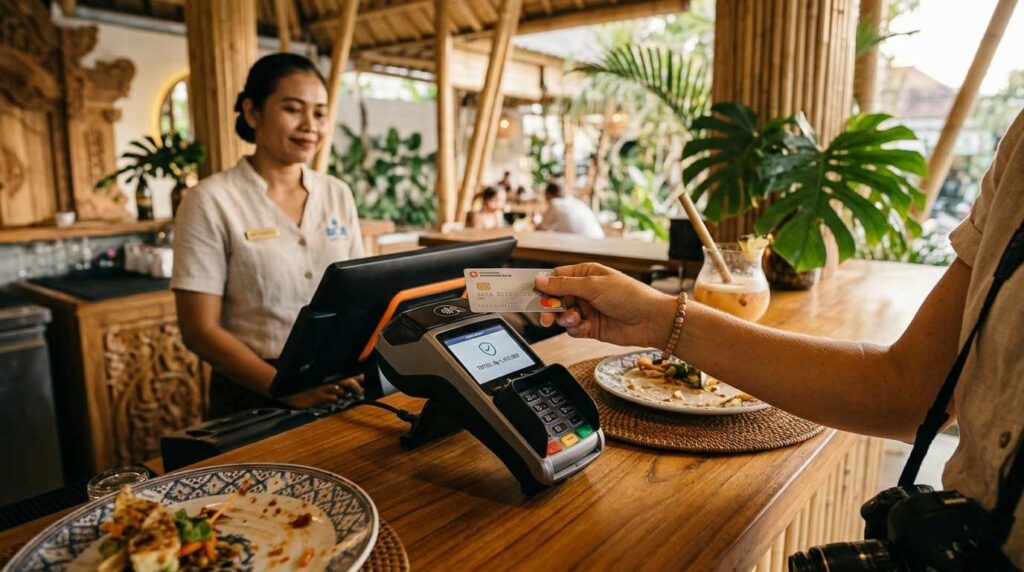
Most established hotels, resorts, and villas with professional reception services accept international credit and debit cards.
Cards are particularly convenient when paying for accommodation deposits, restaurant bills, spa treatments, and additional hotel services.
Before checking out, review your bill carefully and ask whether any additional service charges or taxes apply.
Restaurants and Cafes
Many popular restaurants and cafes in Canggu, Seminyak, Ubud, and Uluwatu accept Visa and Mastercard.
Larger establishments usually have electronic payment terminals, making card payments straightforward.
However, smaller cafes and independent restaurants may prefer cash or offer different payment options.
Shopping Malls and Supermarkets
Major supermarkets, shopping malls, and established retail stores generally accept international cards.
This makes card payments useful for purchasing groceries, clothing, personal care products, and other holiday essentials.
Beach Clubs and Tourist Attractions
Many popular beach clubs and larger tourist attractions accept card payments.
If you are planning to visit places with restaurant reservations, entrance tickets, or minimum spending requirements, check the payment conditions before arriving.
Some businesses may also apply additional card transaction fees. Ask about the total amount before confirming your payment.
How to Withdraw Cash Safely from ATMs in Bali
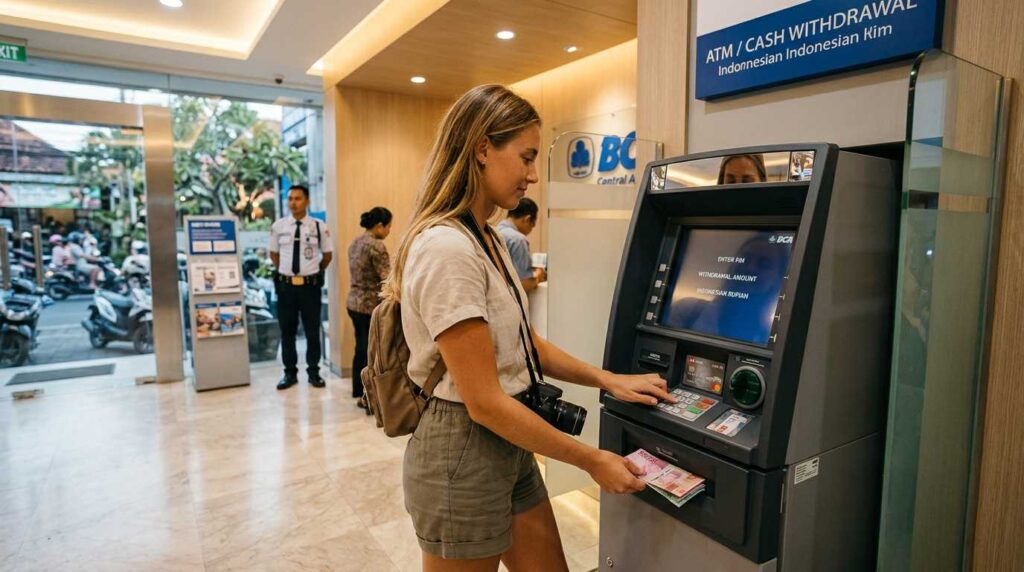
ATMs are widely available in Bali, especially in major tourist areas such as Kuta, Seminyak, Canggu, Sanur, and Ubud.
International debit cards can generally be used at machines displaying compatible networks such as Visa, Mastercard, Plus, or Cirrus.
However, there are a few things you should know before withdrawing money.
Choose ATMs at Banks or Shopping Malls
Whenever possible, use ATMs located inside bank branches, shopping malls, or established supermarkets.
These locations are generally preferable to isolated machines on quiet streets.
Avoid using machines that appear damaged, have unusual attachments, or show signs of tampering.
Check the ATM Withdrawal Fees
Your home bank may charge an international withdrawal fee, while the Indonesian ATM operator may also apply a separate fee.
Before confirming a withdrawal, read the information displayed on the screen.
If the machine offers an exchange rate conversion into your home currency, compare it with the option to be charged in Indonesian Rupiah. In many cases, choosing the local currency avoids the ATM operator’s dynamic currency conversion markup.
Your own bank may still charge a foreign transaction or withdrawal fee.
Protect Your PIN and Bank Card
Basic precautions can reduce the risk of card fraud.
Cover the keypad when entering your PIN.
Never allow strangers to handle your bank card.
Avoid using ATMs in poorly lit or isolated places.
Keep your card in sight during transactions.
Check your bank statements regularly.
Contact your bank immediately if your card is retained or compromised.
It is also helpful to inform your bank about your international travel plans before leaving home.
Tips for Exchanging Money in Bali
If you prefer bringing foreign cash, you can exchange it for Indonesian Rupiah at banks and authorized money changers.
Money exchange services are available around popular tourist destinations, including Kuta, Seminyak, Sanur, and Ubud.
However, choosing a reliable exchange provider is important.
Use Authorized Money Changers
Always choose an authorized money changer with a clear business location, official signage, and displayed exchange rates.
Avoid small unofficial booths advertising unusually attractive rates.
The Australian government’s Smartraveller Indonesia travel advice specifically warns visitors about unauthorized money changers and scams affecting tourists.
Check the Exchange Rate Beforehand
Compare the displayed rate with other established providers before exchanging a large amount.
Exchange rates can vary between locations and providers.
Remember that the highest advertised rate is not necessarily the best option if the business is not trustworthy.
Count Your Money Carefully
After receiving your Rupiah, count the banknotes yourself before leaving the counter.
Make sure the amount matches your receipt and keep the transaction document if one is provided.
Do not allow anyone to take the money back for another count after you have already confirmed the amount.
Avoid Exchanging Too Much at Once
It is generally more practical to exchange money according to your expected daily spending.
You can always exchange more later if necessary.
This also reduces the amount of cash you need to carry during your holiday.
Bali Cash or Card: What About QRIS and Digital Payments?
QRIS stands for Quick Response Code Indonesian Standard. It is Indonesia’s national QR payment system, commonly used by businesses ranging from restaurants to small shops.
You will see QRIS payment codes displayed at many establishments throughout Bali.
However, foreign visitors should understand that not every international banking application can scan and pay through QRIS.
Bank Indonesia currently supports cross-border QRIS payment cooperation with several partner countries, including Malaysia, Thailand, and Singapore.
Eligible visitors can use participating payment applications from their home countries at supported QRIS merchants.
For more details, visit the official Bank Indonesia QRIS Cross-Border information page.
If your banking application is not supported, do not assume that every QRIS code will work with your phone.
It is better to have an alternative payment method, such as a debit card or Indonesian Rupiah in cash.
How Much Cash Should You Bring to Bali?
There is no fixed amount that every tourist needs because spending habits vary significantly.
A backpacker staying in a guesthouse will have different expenses from a family staying at a luxury resort.
Your daily budget also depends on restaurant choices, shopping activities, transportation, and entrance fees.
As a practical approach, consider preparing enough cash for small purchases, parking, local meals, and places that do not accept cards.
You do not need to withdraw or exchange your entire holiday budget at once.
For example, you might use your card for hotel payments and larger restaurant bills while keeping cash for traditional markets, small shops, and local services.
Before visiting remote destinations, check whether ATMs are available nearby and withdraw enough Rupiah in advance.
Keeping your main cash reserve in a secure place rather than carrying everything in one wallet is also a sensible precaution.
Common Payment Mistakes Tourists Should Avoid
Managing money in a foreign country can be confusing, especially when you are unfamiliar with local currency and payment systems.
Here are several mistakes worth avoiding during your Bali holiday.
Carrying Only Credit Cards
Not every business accepts international cards. You may experience difficulties when buying something from a local shop or paying for parking.
Always keep some Rupiah available.
Carrying Only Large Banknotes
Large denominations are useful for bigger purchases, but small vendors may not have enough change.
Keep a selection of smaller notes for everyday transactions.
Ignoring Foreign Transaction Fees
Some banks charge additional fees when you use your card overseas.
Check your bank’s international transaction policy before travelling.
Using Unofficial Money Changers
An attractive exchange rate can sometimes be used to attract unsuspecting tourists.
Choose authorized providers and count your money carefully.
Relying Entirely on Internet-Based Payments
Mobile internet connections can occasionally become unreliable, particularly when travelling to remote areas.
Having cash and a physical bank card provides a useful backup.
Bali Cash or Card: The Best Payment Strategy for Your Holiday
For most international visitors, the best approach is not choosing one payment method over another.
Instead, use a combination of cash, debit cards, and credit cards depending on the situation.
Use your credit card for larger purchases at hotels, established restaurants, and supermarkets. Keep your debit card available for ATM withdrawals, and carry enough Rupiah for smaller everyday expenses.
Before travelling around the island, make sure you have some cash available, particularly if your itinerary includes traditional villages, waterfalls, beaches, or less-developed areas.
If you are planning several sightseeing trips, arranging transportation in advance can also make your holiday easier. You can explore Private Driver Bali for comfortable transportation with a local driver who can help you travel between destinations.
For more practical travel advice, read our guide to Bali Traffic Tips.
Final Thoughts
Bali offers plenty of payment options, but having a combination of cash and cards is still the most practical way to manage your money.
Credit cards make larger purchases convenient, while Indonesian Rupiah remains useful for local markets, traditional restaurants, parking, and smaller services.
Choose authorized money changers, use ATMs in secure locations, protect your bank details, and check your bank’s international fees before travelling.
With a little preparation, you can spend less time worrying about payments and more time enjoying Bali’s beaches, culture, food, and beautiful landscapes.
Planning your trip to Bali? Contact Private Driver Bali for comfortable transportation and explore the island with a friendly local driver.