Uluwatu Temple to Jimbaran Seafood Dinner: Best Timing and Traffic Tips
Navigating the route from Uluwatu Temple to Jimbaran Dinner is easily one of the most popular evening itineraries on the Bukit Peninsula, yet it is also the one that catches travelers off guard due to unexpected evening gridlock. On paper, the distance between the dramatic clifftop sanctuary of Pura Luhur Uluwatu and the sandy shores of Jimbaran Bay looks effortless—barely fifteen kilometers of winding coastal and hillside roads. However, when you factor in the daily exodus of hundreds of tour buses, private drivers, and rental scooters leaving the cliffside right after the sunset Kecak dance, a simple twenty-five-minute drive can easily stretch into an exhausting hour-long crawl.
Understanding the rhythm of South Bali’s traffic is the secret to turning a stressful commute into a seamless transition from cultural sightseeing to toes-in-the-sand dining. Whether you are booking a private car with a local driver, riding a scooter, or arranging a late pickup, knowing exactly when to depart, which roads bottleneck first, and how to time your restaurant arrival makes all the difference.
Planning Your Uluwatu Temple to Jimbaran Dinner Itinerary
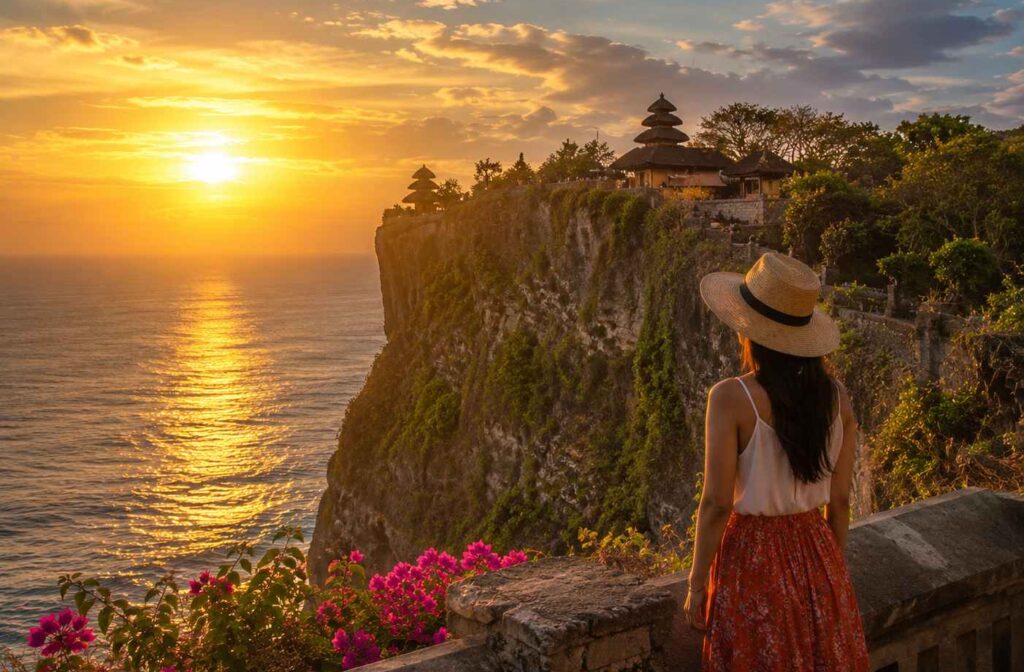
A successful evening going from Uluwatu Temple to Jimbaran Dinner depends entirely on working backward from sunset. In Bali, located close to the equator, sunset times do not fluctuate dramatically throughout the year, typically occurring between 6:05 PM in July and 6:35 PM in January. Because the cliffside temple faces west over the Indian Ocean, visitors flock here specifically for that golden hour glow, creating a predictable daily surge in foot and vehicle traffic.
If you arrive at the temple gates too late, you risk spending your golden hour stuck in the parking lot queue rather than admiring the ocean views. Conversely, if you leave the temple at the exact same minute as everyone else, you will spend your prime dinner appetite inhaling exhaust fumes along Jalan Raya Uluwatu.
Ideal Afternoon Schedule Before the Kecak Dance
To enjoy the temple grounds without feeling rushed, aim to arrive at the Uluwatu Temple ticket counter no later than 4:00 PM. Giving yourself a two-hour buffer before sunset allows you to walk the clifftop pathways at a relaxed pace, take photographs without massive crowds blocking every angle, and keep a safe distance from the famously opportunistic long-tailed macaques.
Around 5:00 PM, begin making your way toward the open-air amphitheater if you plan to watch the traditional Kecak and Fire Dance. The first performance runs from 6:00 PM to 7:00 PM, which coincides directly with sunset. Securing a seat on the upper stone tiers by 5:15 PM guarantees an unobstructed view of both the performers in the center circle and the sun dipping into the ocean behind them. If you skip the dance and only want sunset photos, position yourself near the northern cliff edge by 5:30 PM, and be ready to walk back toward the exit the moment the sun touches the horizon.
Best Departure Windows to Beat the Rush
Timing your exit is the single most critical factor for a smooth transfer. There are two distinct waves of traffic leaving Uluwatu every evening, and avoiding the peak of both will save you significant frustration.
The Early Exit (6:15 PM – 6:25 PM): If you are not watching the Kecak performance, leave the cliff pathways immediately after the sun sets, before the blue hour fades completely. At this time, the amphitheater audience is still seated for the final act of the show, meaning the main exit road is remarkably clear. You can reach Jimbaran Bay before 7:00 PM and snag a front-row table right by the water.
The Post-Show Sprint (6:55 PM – 7:05 PM): If you stay for the 6:00 PM Kecak show, sit near the aisle close to the exit stairs. As soon as the fire dance concludes around 6:55 PM, walk briskly to your vehicle. Being among the first twenty cars out of the parking lot puts you ahead of the massive tour buses that take longer to maneuver and load passengers.
The Late Second Show Option: During peak holiday seasons, Uluwatu adds a second Kecak show from 7:00 PM to 8:00 PM. While this keeps you away from the initial sunset crowd, finishing at 8:00 PM means you will not sit down for dinner in Jimbaran until nearly 8:45 PM, when some smaller beach warungs begin winding down their grills.
Understanding Traffic Conditions Between Uluwatu and Jimbaran
To truly master the journey from Uluwatu Temple to Jimbaran Dinner, it helps to understand the geography of the Bukit Peninsula. The road network here was originally built for quiet fishing villages and limestone quarries, not modern tourism volume. While the main arteries are paved and well-maintained, they remain mostly two-lane roads with minimal shoulder space, meaning one slow-moving truck or a tour bus making a wide turn affects everyone behind it.
| Route Option | Distance | Off-Peak Drive Time | Peak Evening Drive Time (6:30 PM – 7:30 PM) | Best Vehicle Type |
| Jalan Raya Uluwatu (Main Road) | 15.5 km | 25 – 30 mins | 50 – 65 mins | Private Car / Van |
| Jalan Pura Batu Pageh & Ungasan Cut | 16.8 km | 30 – 35 mins | 40 – 50 mins | Experienced Scooter / Small Car |
| Jalan Pantai Balangan Alternate | 18.2 km | 35 – 40 mins | 45 – 55 mins | Scooter / Flexible Driver |
Where Bottlenecks Happen After Sunset
The first major choke point occurs right outside the Uluwatu Temple parking exit where vehicles merge onto Jalan Raya Uluwatu. Parking attendants do their best with whistles and flashlights, but the sheer volume of cars funneling onto a single northbound lane creates an immediate standstill.
Once you clear the temple gate, traffic flows moderately well past Pecatu until you reach the Nirmala Ungasan supermarket intersection. Here, vehicles coming from Dreamland, Bingin, and Padang Padang beaches converge onto the main road heading toward Jimbaran. Further north, the steep, winding descent down the Jimbaran hill—just before reaching the flat coastal plain—frequently slows to a crawl due to heavy trucks and cars braking sharply on the curves.
Smart Route Alternatives and Local Shortcuts
If your map app shows dark red lines all the way through Pecatu and Ungasan, a knowledgeable local driver will often pivot to secondary roads. Heading east from the temple along Jalan Pura Batu Pageh toward the Pandawa area allows you to bypass the congested Pecatu village stretch before cutting north through quieter residential lanes in Ungasan.
Another reliable option for scooter riders or confident drivers in compact cars is turning west toward the Balangan junction and weaving through the backroads behind Garuda Wisnu Kencana (GWK) Cultural Park. While these backroads add two or three kilometers to your odometer and feature a few speed bumps and narrow turns, keeping your wheels moving at 30 km/h feels infinitely better than sitting stationary in bumper-to-bumper traffic.
Transportation Options for Your Evening Trip
Choosing the right mode of transport for your Uluwatu Temple to Jimbaran Dinner excursion affects both your comfort and your departure flexibility. Because Uluwatu sits at the southwestern tip of Bali, transportation logistics require slightly more forethought than in central hubs like Seminyak or Canggu.
Hiring a Private Driver vs. Using Ride-Hailing Apps
Booking a Uluwatu and Jimbaran tour with an experienced local driver is overwhelmingly the most stress-free choice for this route. Your driver will drop you at the temple gate, wait patiently in the designated parking area while you explore and watch the show, and have the air conditioning running the moment you walk back out. You never have to worry about phone signal drops or surge pricing.
Relying on ride-hailing apps like Grab or Gojek works fine for getting to Uluwatu in the afternoon, but getting out at 7:00 PM is notoriously tricky. Mobile data reception around the cliffside weakens considerably when thousands of tourists upload sunset videos simultaneously. Furthermore, local transport cooperatives restrict app drivers from picking up passengers directly inside the main temple courtyard, forcing you to walk several hundred meters up the main road in the dark to meet your ride. If you are flying out later that night, combining your dinner stop with a reliable Bali airport transfer and private transport ensures your luggage stays secure in the trunk while you enjoy your meal just ten minutes from Ngurah Rai International Airport.
Riding a Scooter Safely After Dark
Renting a scooter gives you an undeniable advantage in evening traffic, allowing you to filter safely past lines of stationary cars. However, riding from Uluwatu to Jimbaran after sunset comes with specific hazards that demand extra caution. Street lighting along several stretches of Jalan Raya Uluwatu and the Ungasan hills is patchy or nonexistent.
Watch closely for stray dogs crossing the road, uneven asphalt patches near the road edges, and oncoming vehicles using high-beam headlights that temporarily blind your vision. Always wear a certified helmet with a clear visor—tinted visors severely reduce visibility at night—and avoid rushing down the steep Jimbaran hill just to shave five minutes off your arrival time.
Uluwtu Temple

Jimbaran Beach Dinner
Choosing the Best Jimbaran Seafood Cafe Upon Arrival
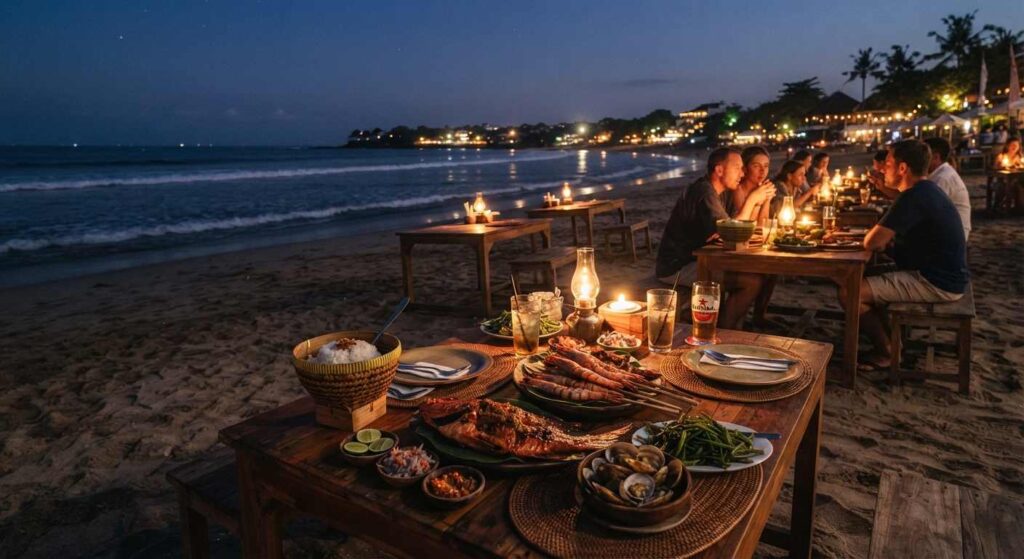
Once you descend the hill and turn onto the coastal roads leading to the beach, the atmosphere shifts immediately from hectic traffic to smoky, aromatic oceanfront dining. Planning your Uluwatu Temple to Jimbaran Dinner finish means picking the right stretch of sand, as Jimbaran Bay is divided into three main clusters of seafood cafes, each offering a slightly different vibe.
Why Kedonganan Beach Is the Best Spot for Dinner
For the most comfortable beachfront dining experience, ask your driver to head straight to Kedonganan Beach at the northern end of Jimbaran Bay. Located right beside the traditional morning fish market, Kedonganan offers a wide, open shoreline where tables are spaced generously apart along the sand.
Unlike the narrower, densely packed beachfront strips further south—where dozens of adjacent coconut-husk grills sit close to the dining tables and trap thick smoke in the evening breeze—Kedonganan gives you plenty of fresh ocean air. Because the restaurants here sit directly next to the local fishing harbor, the seafood is delivered straight from the boats, giving you fresher catches, faster kitchen service, and a much more relaxed candlelit dinner by the waves.
How to Order Fresh Seafood Without Overpaying
Dining at a Jimbaran seafood cafe follows a specific ritual that can confuse first-timers. Instead of ordering off a standard printed menu at your table, you walk up to the ice-filled display tanks at the entrance of the restaurant to select your catch alive or fresh by weight.
Check the Price Per Kilogram: Before pointing at crabs, lobsters, or red snapper, confirm the price per 100 grams or per kilogram, and verify whether taxes and service charges are included.
Watch the Scale: Stand right next to the digital or hanging scale as the staff weighs your selection. Make sure the basket is drained of water so you are not paying seafood prices for seawater.
Ask About Preparation: Most restaurants grill seafood over coconut husks, which imparts a distinct smoky sweetness. Ask for their signature Jimbaran-style bumbu marinade on the side if you prefer milder flavors, and confirm that steamed rice, plecing kangkung (water spinach with chili), sambal, and peanuts are included free with your weight order—almost all established cafes include these sides automatically.
Essential Tips for a Stress-Free Evening
A few small preparations before you leave your hotel will ensure your evening runs smoothly from start to finish. Pack a light layer or scarf in your daypack; while Uluwatu is hot and humid at 4:00 PM, the ocean breeze across Jimbaran Bay can feel surprisingly cool by 8:30 PM, especially after you have been walking in the sun all afternoon.
Bring sufficient Indonesian Rupiah in cash, particularly smaller denominations like 50,000 and 100,000 IDR notes. While the larger Jimbaran seafood restaurants accept major credit cards, signal drops occasionally stall card terminals, and you will need cash for Uluwatu Temple entrance tickets, Kecak dance passes, and parking fees. Finally, if you are traveling with a group of four or more, ask your driver to call ahead to your preferred Jimbaran cafe around 5:30 PM to hold a beachfront table—most cafes gladly reserve a spot for arriving guests, letting you walk straight from your car to the ocean breeze without waiting in line
Planning your South Bali evening? Send us your hotel location and preferred date on WhatsApp for a quick, no-obligation quote