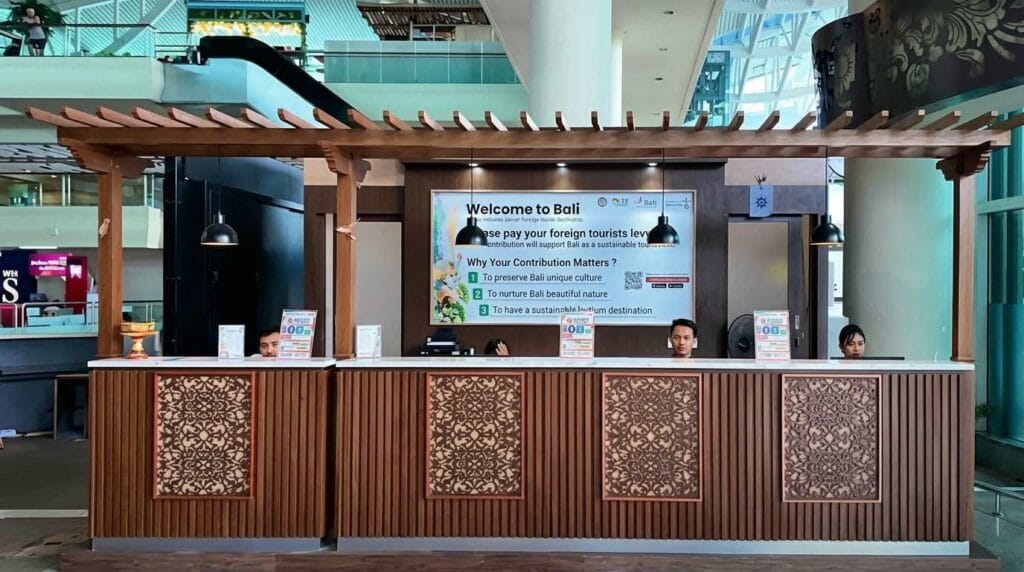
Money Changer Bali Tips to Avoid Scams
If you are visiting Bali for the first time, knowing some Money Changer Bali Tips can help you exchange your foreign currency safely and avoid common problems. Bali has many money changers in popular tourist areas such as Kuta, Seminyak, Canggu, Sanur, Ubud, and Nusa Dua. However, not every exchange counter offers the same level of service or transparency.
The exchange rate displayed on a large sign can look attractive, but the highest rate is not always the best option. Some travelers focus only on the number shown on the board and forget to check whether the money changer is authorized, whether the calculation is correct, or whether additional conditions apply.
The good news is that exchanging money in Bali does not have to be complicated. With a few simple checks, you can reduce the risk of mistakes and make your currency exchange much safer.
Money Changer Bali Tips: Choose an Authorized Money Changer
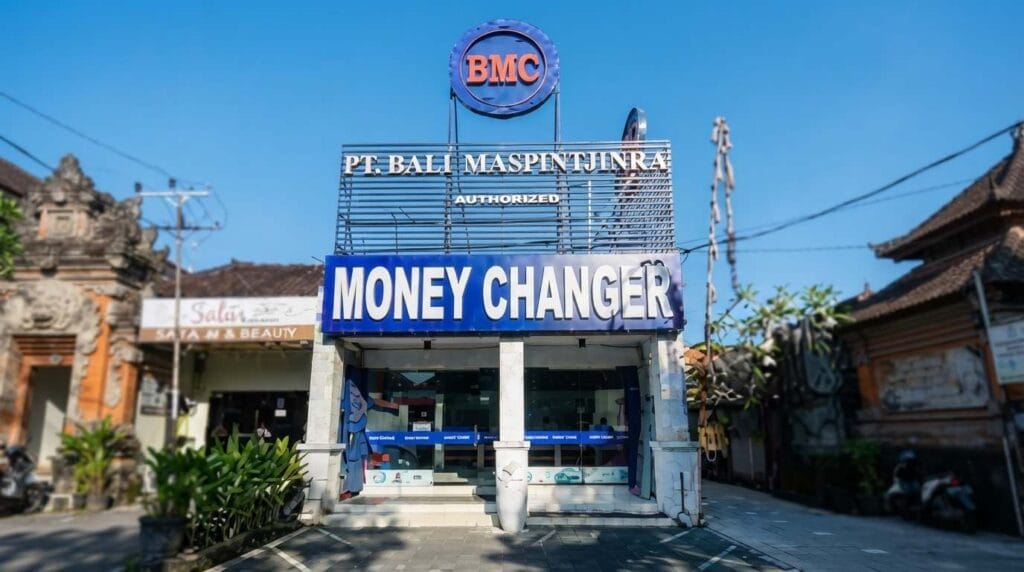
One of the most important things to check is whether the money changer is authorized.
Bank Indonesia regulates non-bank foreign exchange operators in Indonesia. Authorized money changers are required to provide transparent exchange-rate information and consumer protection. Bank Indonesia also states that licensed operators should display the relevant authorization information, including the “Authorized Money Changer” designation, in a visible location.
For travelers, this provides a useful first filter when choosing where to exchange money.
Look for a permanent business location with clear company information and authorization details. A professional money changer should not make you feel rushed or uncomfortable when asking about the exchange rate.
You can also check current licensed operators through the official Bank Indonesia information system.
Check licensed money changers through Bank Indonesia
Why authorization matters
An unusually high exchange rate can sometimes be used to attract tourists. Bank Indonesia specifically notes that unauthorized operators may offer more attractive rates and may appear less transparent or lack a permanent business location.
This does not mean every small money changer is unsafe. Instead, the key point is to verify the business before handing over a significant amount of cash.
Compare the Exchange Rate Before You Exchange
Another important part of these Money Changer Bali Tips is comparing rates before making a transaction.
Suppose one money changer offers a slightly lower rate than another. That does not automatically mean you are losing a lot of money. What matters is the final amount of Indonesian rupiah you receive.
For example, imagine you want to exchange USD 500.
If the exchange rate is:
- Money Changer A: IDR 16,000
- Money Changer B: IDR 16,100
The difference is IDR 50,000 for USD 500.
That may or may not be worth choosing a less convenient location, especially if the second money changer has questionable practices or poor transparency.
For a larger transaction, however, comparing rates can make a meaningful difference.
Do not automatically choose the highest rate
A very high rate should encourage you to ask more questions rather than immediately exchange your money.
Check:
- Is the rate clearly displayed?
- Is it the buying or selling rate?
- Is there any condition attached to the advertised rate?
- Is the business authorized?
- Will you receive exactly the amount shown by the calculation?
- Can you count the money comfortably before leaving?
A good exchange rate is useful, but a transparent and secure transaction is more important than chasing the highest number.
Understand the Buy and Sell Rates
Money changers normally display different rates depending on whether they are buying or selling a foreign currency.
If you are a tourist bringing US dollars, Australian dollars, Singapore dollars, euros, or another foreign currency and exchanging it for Indonesian rupiah, you need to look at the rate at which the money changer buys your foreign currency.
This is an easy point to misunderstand when you first arrive in Bali.
If the board shows several rates, ask the staff:
“How much Indonesian rupiah will I receive for this amount?”
This simple question gives you a final figure before you hand over your money.
Use your phone calculator
Before completing the transaction, calculate the expected amount yourself.
For example:
USD 500 × IDR 16,000 = IDR 8,000,000
If the cashier tells you that you should receive IDR 8,000,000, you can compare the calculation with the actual cash.
A phone calculator can be one of the simplest tools for avoiding a calculation mistake.
Count Your Money Carefully at the Counter
This is one of the most important practical Money Changer Bali Tips.
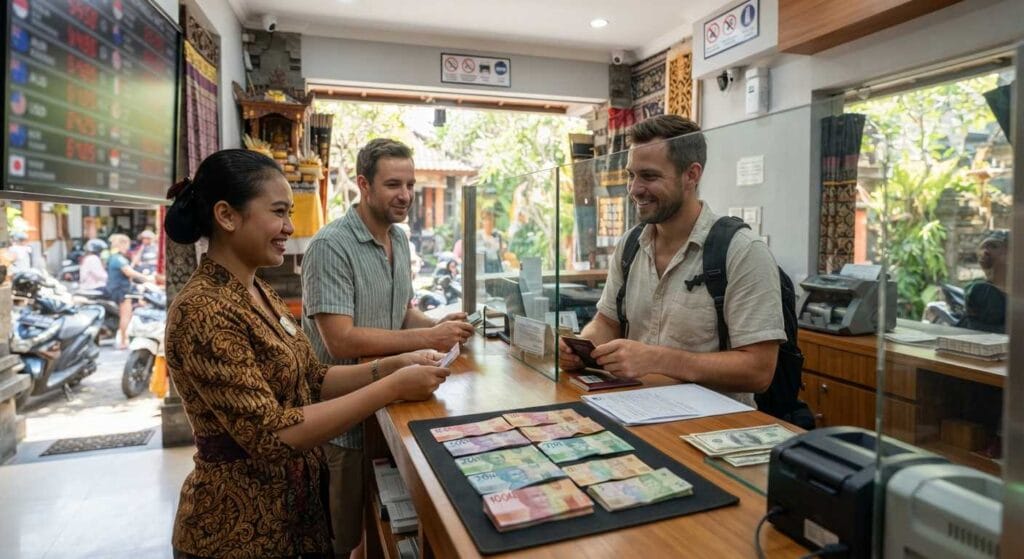
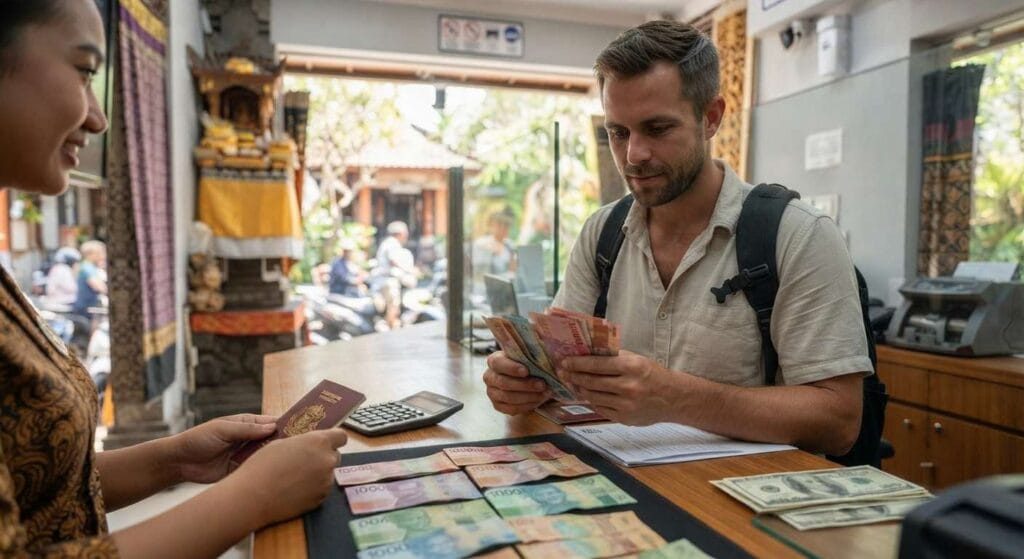
After receiving your Indonesian rupiah, count the money carefully while you are still at the counter.
Do not immediately put the cash into your wallet or bag.
Separate the banknotes into manageable groups and count them slowly. If you exchange a large amount, take your time. A reputable money changer should allow you to verify the amount.
Recount before leaving
After counting the money once, count it again if you are exchanging a substantial amount.
You should leave the counter only after you are satisfied that:
- The amount is correct.
- The banknotes are genuine and acceptable.
- The exchange rate matches the agreed rate.
- You have received the correct denomination.
- You have received your receipt, if provided.
If something does not look right, ask the staff immediately.
Once you have left the premises and mixed the cash with your other money, resolving a disagreement can become much more difficult.
Be Careful With Distractions
Some tourists have heard stories about money changers using complicated counting techniques or distractions during transactions.
You do not need to assume that every money changer is trying to scam you. However, it is sensible to remain attentive whenever you are handling a large amount of cash.
If the counting process suddenly becomes confusing, slow down.
You can simply say:
“Could we count it again, please?”
Do not feel embarrassed about checking your money.
A professional transaction should be clear and easy to understand.
Never let yourself feel rushed
If someone tells you to hurry because other customers are waiting, take a moment to finish checking your cash.
You are responsible for your own transaction, and there is nothing wrong with taking a few extra minutes.
Avoid Money Changers With Suspiciously High Rates
One of the biggest warning signs is a rate that looks dramatically better than the rates offered by several other established money changers.
For example, if several reputable businesses are offering similar rates and one small counter offers a rate that appears significantly higher, investigate before exchanging.
Bank Indonesia advises consumers to be cautious of unauthorized foreign exchange operators, including those that may attract customers with unusually attractive rates.
A slightly better rate is normal.
A rate that looks too good to be true deserves extra attention.
Check the Location Before Exchanging a Large Amount
The physical location can also tell you something about the business.
A professional money changer should generally have a permanent location with clear signage and business information.
Be more cautious when someone approaches you outside a formal business and offers to exchange money privately.
For your first currency exchange in Bali, consider using an established and clearly identifiable money changer, bank, or ATM rather than accepting an offer from a stranger.
Exchange smaller amounts if you are unsure
If you are uncertain about a particular location, you do not need to exchange your entire travel budget at once.
You could exchange a smaller amount first and use the experience to assess the service.
For example, instead of exchanging several thousand dollars immediately, exchange enough Indonesian rupiah for your first few days and then use a trusted bank or authorized money changer later.
This reduces your exposure if you encounter a problem.
Should You Use an ATM Instead?
An ATM can be a convenient alternative to carrying a large amount of foreign cash.
Many travelers use international debit or credit cards to withdraw Indonesian rupiah after arriving in Bali.
However, ATM withdrawals can involve fees from your card issuer, the ATM operator, or currency conversion charges. Check your bank’s terms before traveling.
For some travelers, a combination of cash and cards works best.
You can carry some Indonesian rupiah for smaller purchases while keeping a card available for hotels, restaurants, and larger expenses.
Keep your cash secure
After exchanging money, avoid displaying a large amount of cash in public.
Separate your spending money from the rest of your travel funds.
You can keep a small amount in your wallet and store the remaining cash securely at your accommodation.
This is especially useful when traveling between destinations such as Ubud, Canggu, Kuta, Sanur, and Nusa Dua.
If you are planning several day trips around Bali, you may also want to organize your transportation in advance. Our Bali Private Driver Service can help with private transportation between destinations, allowing you to avoid carrying unnecessary amounts of cash while moving around the island.
Carry Some Indonesian Rupiah for Small Expenses
Although cards are increasingly accepted in Bali, cash is still useful for many everyday situations.
You may need Indonesian rupiah for:
- Small local restaurants
- Parking
- Entrance fees
- Local markets
- Small shops
- Tips
- Street food
- Some attractions
- Local transport
For a Bali trip involving many attractions, planning your daily transportation and cash needs can make your day much easier.
If you are planning an Ubud sightseeing day, for example, you can also check our Ubud Private Driver Tour for ideas about arranging transportation between attractions.
Keep Your Exchange Receipt
Whenever possible, keep the receipt or transaction record from your currency exchange.
A receipt can be useful if you later discover a discrepancy or need to remember where you exchanged your money.
It also helps you keep track of your travel spending.
For larger exchanges, keeping a record is particularly useful.
Write down:
- Date of exchange
- Currency
- Amount exchanged
- Exchange rate
- Indonesian rupiah received
- Name or location of the money changer
This takes only a minute but can make your travel finances easier to manage.
What to Do If You Suspect a Problem
If you believe there is a problem with your exchange, stay calm.
First, check your calculation and count the money again.
Then speak directly with the staff or manager and explain the issue clearly.
If the problem cannot be resolved, keep your receipt and any relevant information about the business.
Bank Indonesia has consumer-protection rules for authorized KUPVA operators, including requirements for transparent exchange-rate information and effective complaint handling.
You can learn more about the regulatory framework and consumer protection directly from Bank Indonesia.
Bank Indonesia – KUPVA and consumer protection information
Do not argue unnecessarily
If you believe something is wrong, focus on documenting the transaction rather than getting into an argument.
Take note of the business name, location, time, amount, and exchange rate.
If necessary, contact the appropriate authority or seek assistance from your accommodation or travel provider.
Best Money Changer Bali Tips for First-Time Visitors
If this is your first trip to Bali, you do not need to memorize complicated rules.
Remember these simple steps:
- Choose an authorized money changer.
- Check the exchange rate before handing over your money.
- Ask how much rupiah you will receive.
- Calculate the amount yourself.
- Count the cash carefully at the counter.
- Recount before leaving.
- Keep your receipt.
- Be cautious of unusually high rates.
- Do not allow anyone to rush you.
- Avoid exchanging large amounts with unofficial individuals.
- Keep your cash secure after the transaction.
- Consider using an ATM or card as an alternative.
These simple habits can make a big difference.
Money Changer Bali Tips for Different Bali Destinations
The same principles apply whether you are staying in Kuta, Seminyak, Canggu, Ubud, Sanur, Nusa Dua, or another part of Bali.
If you are planning to travel around the island, it can be useful to plan your transportation before leaving your hotel.
For example, travelers staying in Ubud can combine sightseeing with private transportation using our Ubud Day Tour Itinerary.
If you are interested in Mount Batur and Kintamani, you can also read our Kintamani Private Driver Bali guide.
For travelers who want to understand transportation costs before arriving, our Private Driver Bali Cost guide provides more information about private driver pricing.
Planning your transportation in advance can also make it easier to estimate how much cash you need each day.
Is It Safe to Exchange Money in Bali?
Yes, exchanging money in Bali can be safe when you choose an authorized provider and take reasonable precautions.
The main issue is not simply finding a money changer. It is choosing a transparent business and paying attention during the transaction.
Bank Indonesia maintains information about licensed foreign exchange operators, and its regulations include consumer-protection requirements for authorized KUPVA operators.
Therefore, travelers should focus on verification rather than assuming that every money changer is either safe or unsafe.
A good rule is simple:
Choose transparency over an unusually high exchange rate.
Final Money Changer Bali Tips for a Stress-Free Trip
Using a money changer does not need to be stressful.
Before exchanging your money, check the business, compare the rate, calculate the expected amount, and take your time counting the cash. Avoid rushing simply because the counter is busy.
The safest approach is to use an authorized money changer, confirm the transaction clearly, and keep your receipt.
When you combine these habits with sensible cash management, you can enjoy your Bali holiday without worrying unnecessarily about currency exchange.
If you are planning a Bali holiday and need reliable transportation between the airport, hotel, and tourist attractions, you can also arrange a private driver in advance.
Book a Bali Private Driver on WhatsApp
A local private driver can help you travel between Bali destinations comfortably while you focus on enjoying your holiday.
Frequently Asked Questions
What is the most important Money Changer Bali Tip?
The most important tip is to use an authorized and transparent money changer. Always check the exchange rate, calculate the expected amount, and count your cash before leaving the counter.
Should I choose the money changer with the highest rate?
Not necessarily. A very high rate can be attractive, but you should also check whether the business is authorized and transparent. A slightly lower rate from a reputable operator may be a safer choice.
Should I count the money before leaving?
Yes. Count the money carefully at the counter and make sure the amount matches your calculation before leaving the premises.
Can tourists use ATMs in Bali?
Yes. International travelers commonly use ATMs to withdraw Indonesian rupiah. However, check your bank’s fees and foreign exchange policies before traveling.
Is it better to bring cash or use a card in Bali?
Using a combination is often practical. Carry enough Indonesian rupiah for small expenses while keeping a card available for larger purchases and emergencies.
Can I exchange money at Bali Airport?
You can find currency exchange services at and around the airport, but it is still important to compare rates and check the terms before exchanging a large amount.
How can I check whether a money changer is authorized?
Bank Indonesia provides information about licensed non-bank foreign exchange operators. You can check its official information system before choosing a provider