Gunung Kawi Ubud Bali: Complete Travel Guide for First Time Visitors
Introduction to Gunung Kawi Temple Ubud Bali
Gunung Kawi Temple Ubud is one of the most fascinating ancient temple complexes in Bali. Located near Ubud in the peaceful village of Tampaksiring, this hidden cultural site offers visitors a combination of Balinese history, lush tropical scenery, sacred temples, and a calm spiritual atmosphere.
For travelers looking to escape the crowded tourist areas of southern Bali, Gunung Kawi Ubud Bali is the perfect destination. The temple is surrounded by rice terraces, coconut trees, and the beautiful Pakerisan River valley, making it one of the most scenic cultural attractions in the island’s interior.
Unlike many modern tourist attractions, Gunung Kawi still feels authentic and deeply connected to Balinese Hindu traditions. Visitors can experience centuries-old stone carvings, holy water temples, and traditional village life in one peaceful location.
Whether you are interested in Balinese culture, photography, history, or nature, this guide will help you plan your visit to Gunung Kawi Ubud Bali.
History of the Ancient Rock Temple in Ubud
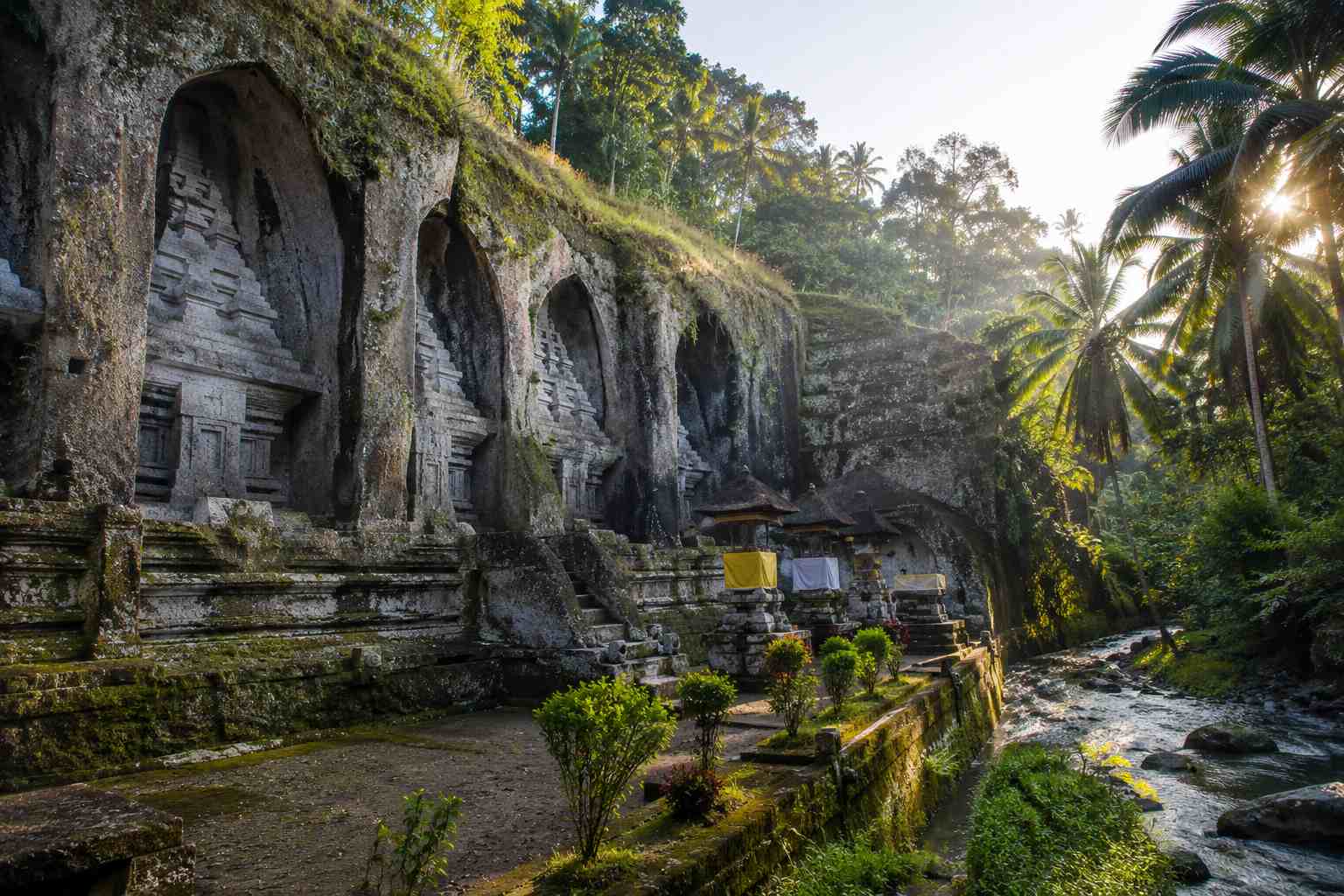
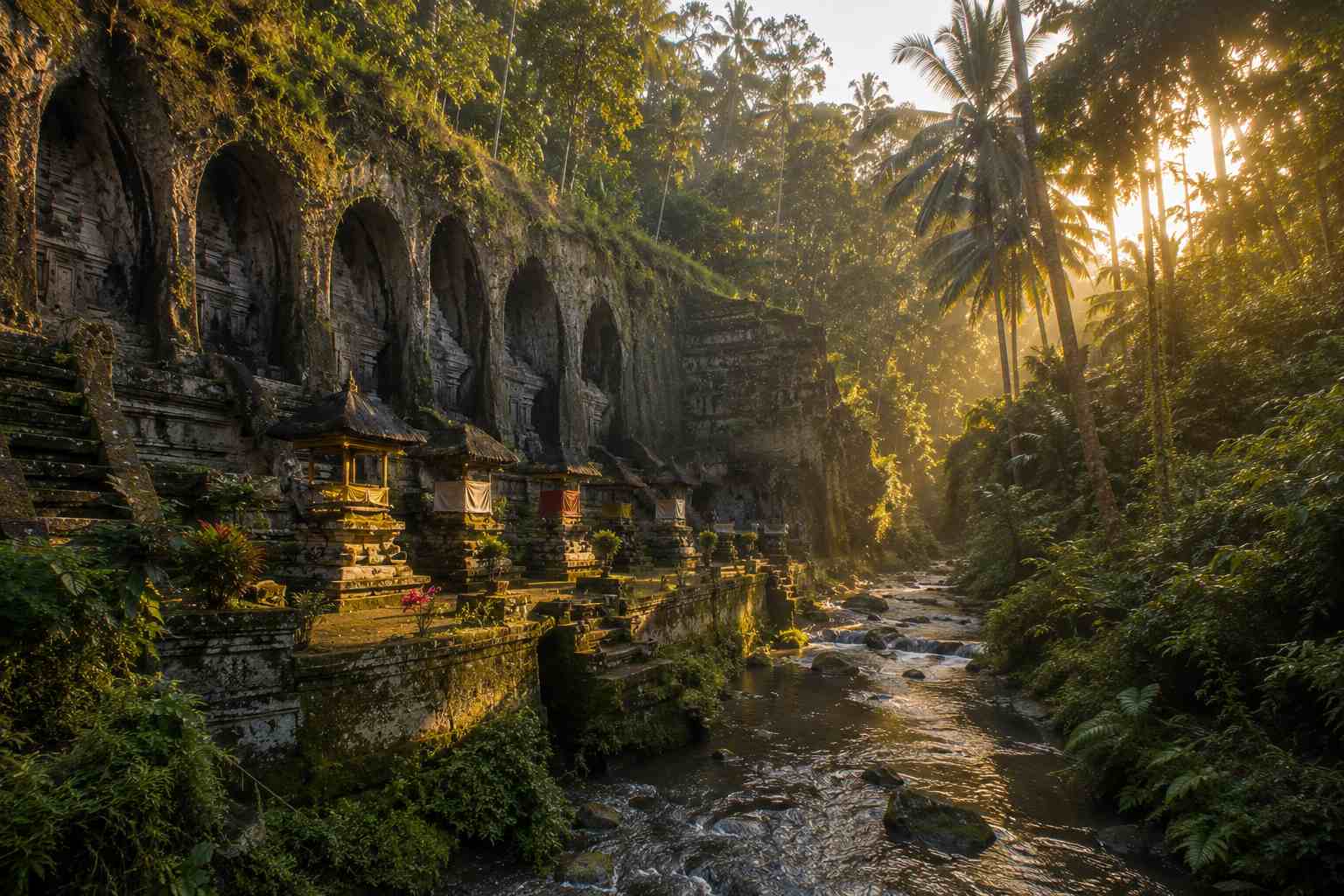
Gunung Kawi is believed to date back to the 11th century during the reign of King Anak Wungsu from the ancient Balinese kingdom. The temple complex is famous for its giant rock-cut shrines carved directly into the cliffs beside the river.
There are ten massive shrines called “candi,” each standing around seven meters tall. These shrines are thought to honor royal family members and ancient Balinese kings.
The architecture at Gunung Kawi Ubud Bali is very different from most temples in Bali. Instead of traditional temple towers, the shrines are carved into stone walls, creating a dramatic and mysterious appearance.
The surrounding valley also adds to the sacred atmosphere. Balinese Hindus still use the area for ceremonies and religious activities today, so visitors should always show respect while exploring the temple grounds.
How to Get to Gunung Kawi Temple Ubud
Gunung Kawi is located in Tampaksiring, approximately 30 minutes from central Ubud and around 1.5 hours from Seminyak or Canggu depending on traffic.
The easiest way to visit is by hiring a private driver because public transportation in Bali is limited. Many travelers combine Gunung Kawi with nearby attractions such as:
- Tirta Empul Temple
- Tegalalang Rice Terrace
- Goa Gajah
If you are looking for a comfortable Bali tour with an English-speaking driver, you can book directly through:
Private Driver Bali
For directions and updated visitor information, you can also check:
Gunung Kawi Temple on Google Maps
Entrance Fee and Opening Hours
The entrance fee for Gunung Kawi Ubud Bali is affordable compared to many tourist attractions in Bali. Prices may change over time, but generally visitors can expect:
- Adult ticket: around IDR 50,000
- Parking fee for scooters and cars
- Sarong rental included or available at the entrance
Opening hours are usually:
- Daily from 8:00 AM to 6:00 PM
It is recommended to visit early in the morning to avoid crowds and hot weather. Morning light is also better for photography.
What to Expect During Your Visit
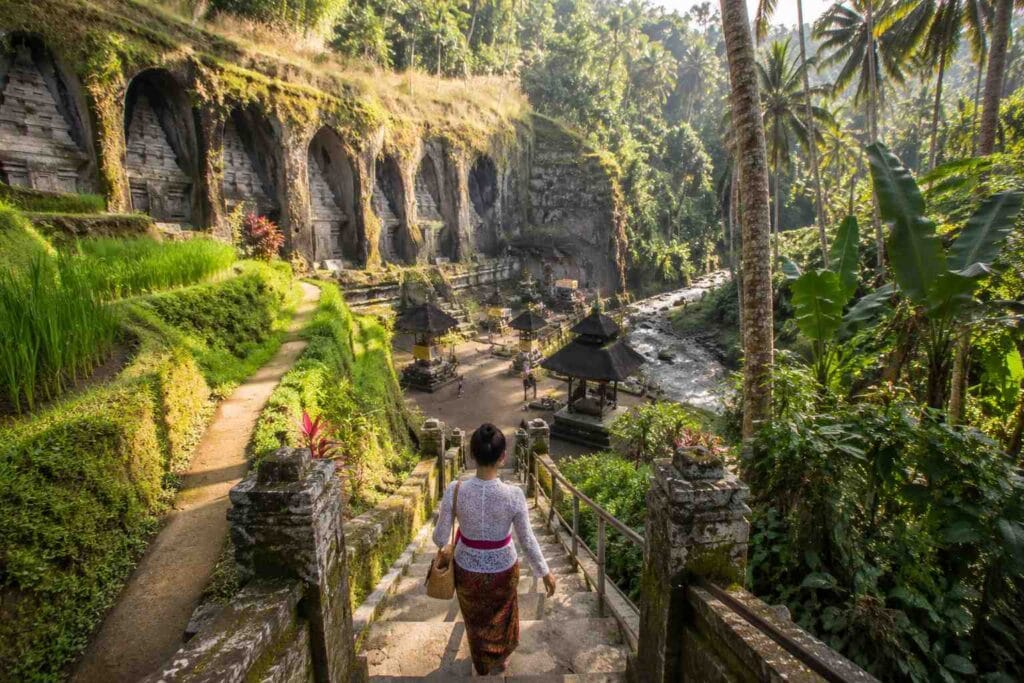
One of the most memorable parts of visiting Gunung Kawi Ubud Bali is the long staircase leading down into the valley. Visitors must walk down hundreds of stone steps surrounded by tropical greenery and rice fields.
Although the walk back uphill can be tiring, the scenery is absolutely worth it.
Along the pathway, you will find:
- Small cafes
- Souvenir shops
- Rice terrace viewpoints
- Traditional Balinese homes
- Coconut plantations
Once you reach the bottom, the atmosphere becomes peaceful and spiritual. The sound of flowing water and birds creates a relaxing environment far from Bali’s busy tourist areas.
The temple complex itself features ancient carvings, meditation areas, river crossings, and hidden corners perfect for photography.
Best Time to Visit the Sacred Temple Complex
The best time to visit Gunung Kawi Ubud Bali is during Bali’s dry season between April and October. During this period, the weather is generally sunny and ideal for walking through the valley.
Early mornings are recommended because:
- The temperature is cooler
- The temple is less crowded
- Lighting conditions are better for photos
- The atmosphere feels more peaceful
Avoid visiting during heavy rain because the stone stairs can become slippery.
Dress Code and Temple Etiquette
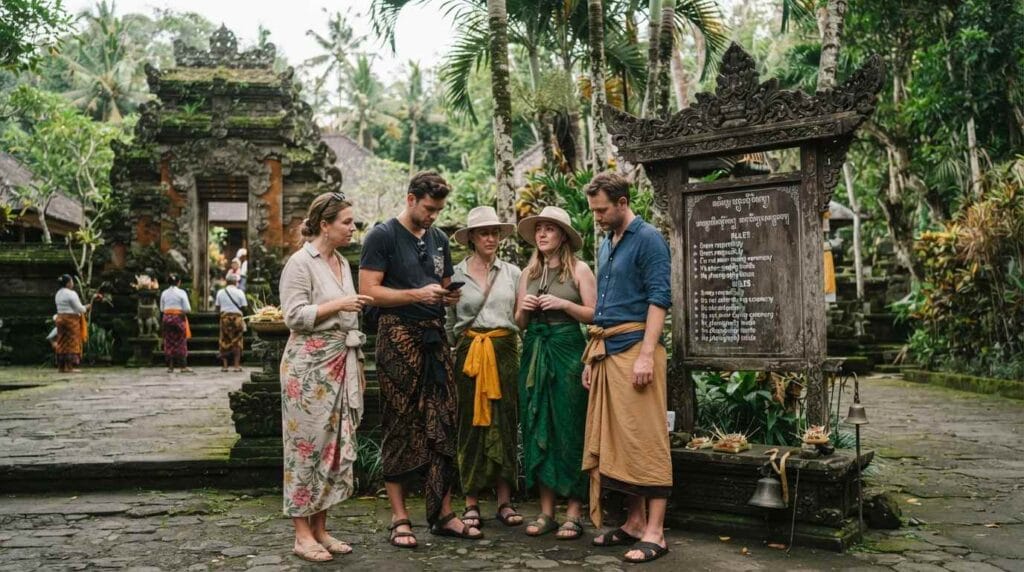
Like all sacred temples in Bali, visitors should follow local customs and dress respectfully.
Important temple etiquette includes:
- Wear a sarong and sash
- Cover shoulders appropriately
- Avoid loud behavior
- Respect religious ceremonies
- Do not climb sacred structures
Women during menstruation are traditionally not allowed to enter Balinese temples according to local customs.
By respecting Balinese culture, visitors help preserve the spiritual atmosphere of Gunung Kawi Ubud Bali.
Photography Tips at Gunung Kawi Ubud Bali
Gunung Kawi is one of the most photogenic temple sites in Bali. The combination of jungle scenery, stone shrines, and river landscapes creates amazing photography opportunities.
Best photography spots include:
The Stone Carvings
The ancient cliff carvings are the highlight of the temple and look especially dramatic during morning light.
Rice Terrace Pathways
The walking paths above the temple offer beautiful views of green rice fields and tropical landscapes.
Riverside Area
The river area provides peaceful natural scenery perfect for cinematic travel photography.
For the best results, bring comfortable walking shoes and a camera with a wide-angle lens.
Nearby Attractions Around Gunung Kawi
One reason travelers love Gunung Kawi Ubud Bali is its location near many other popular attractions.
Tirta Empul Holy Water Temple
Tirta Empul Temple is famous for its sacred purification pools where locals and tourists participate in traditional cleansing rituals.
Tegalalang Rice Terrace
Tegalalang Rice Terrace offers iconic rice terrace views and jungle swings popular on social media.
Goa Gajah
Goa Gajah is another historical site known for its elephant cave entrance and ancient Hindu relics.
Why Gunung Kawi Is One of Bali’s Hidden Gems
Many tourists visit famous temples like Tanah Lot or Uluwatu, but Gunung Kawi offers a more authentic cultural experience.
Reasons travelers love Gunung Kawi Ubud Bali:
- Fewer crowds
- Rich historical atmosphere
- Beautiful jungle scenery
- Unique stone architecture
- Peaceful spiritual environment
- Excellent photography opportunities
The temple feels more connected to traditional Balinese life compared to heavily commercialized tourist attractions.
Travel Tips for First Time Visitors
Before visiting Gunung Kawi Ubud Bali, keep these useful tips in mind:
Wear Comfortable Shoes
The temple requires a lot of walking and stair climbing.
Bring Water
The tropical climate can become very hot during midday.
Carry Cash
Small shops and parking areas may not accept cards.
Respect Local Culture
Remember that Gunung Kawi is an active religious site, not only a tourist attraction.
Hire a Private Driver
Exploring Ubud and Tampaksiring is easier with a local driver who understands traffic and temple schedules.
You can arrange a custom Bali tour here:
Bali Private Driver Service
Is Gunung Kawi Ubud Bali Worth Visiting?
Absolutely. Gunung Kawi is one of the best destinations in Bali for travelers who want to experience history, culture, and nature in one location.
Unlike crowded tourist spots, this ancient temple complex offers a peaceful environment where visitors can truly appreciate Bali’s spiritual heritage.
The dramatic rock carvings, jungle valley scenery, and authentic atmosphere make Gunung Kawi Ubud Bali a must-visit attraction for first time visitors exploring Ubud and central Bali.
If you want to discover a quieter side of Bali while learning about ancient Balinese culture, Gunung Kawi deserves a place on your travel itinerary.