Bali Traditional Dance Guide: Types, History, and Cultural Meaning
Bali traditional dance is one of the most iconic cultural treasures of the Island of the Gods. Deeply rooted in Balinese Hindu traditions, these performances are not only artistic expressions but also sacred rituals that connect the Balinese people with their spiritual beliefs.
If you are visiting Bali for the first time, watching a traditional dance in Bali is a must-do cultural experience. In this guide, you will learn about the types of Balinese traditional dance, their history, and the cultural meaning behind every movement.
The History of Bali Traditional Dance
The history of bali traditional dance dates back centuries and is closely connected to the development of Hinduism in Bali. Dance performances were originally created as part of temple ceremonies and religious rituals.
In ancient times, Balinese dance performance was not meant for entertainment. It was performed to honor the gods and ancestors. Over time, some dances evolved into performances for tourists while still preserving their sacred elements.
Today, traditional dance in Bali can be categorized into three main groups:
Wali (Sacred Dances) – performed only inside temples during ceremonies
Bebali (Semi-Sacred Dances) – performed for rituals and religious storytelling
Balih-balihan (Entertainment Dances) – performed for public and tourists
This classification shows how deeply spiritual Bali cultural dance truly is.
Types of Bali Traditional Dance
There are many types of bali traditional dance, each with unique costumes, music, and storytelling.
1. Barong Dance
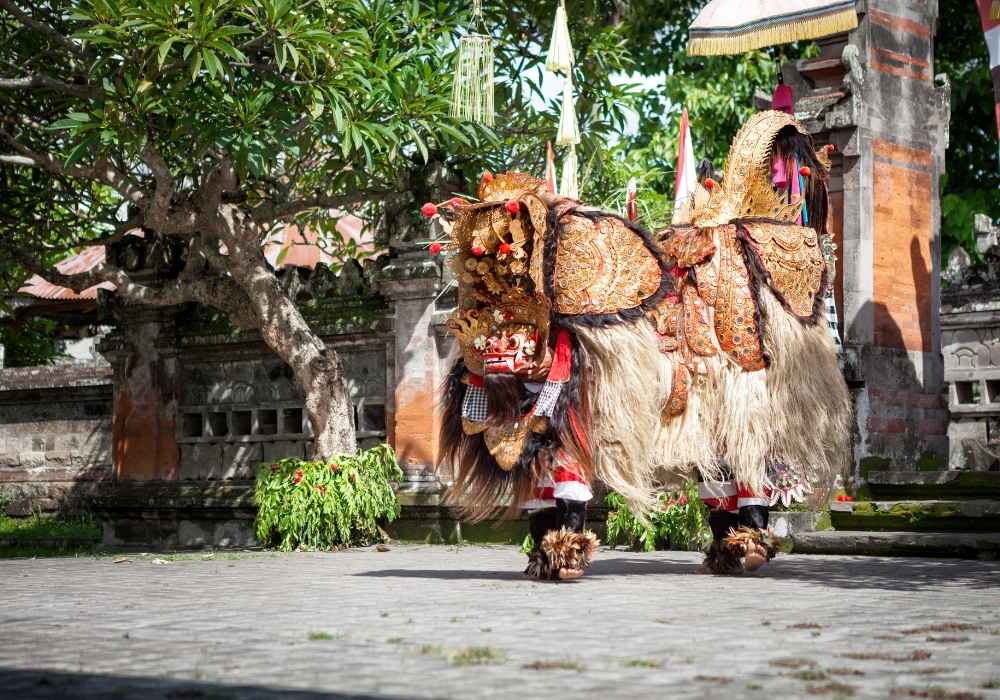
The Barong dance represents the eternal battle between good and evil. Barong symbolizes good spirits, while Rangda represents evil forces.
This dance is dramatic and often includes trance scenes. It is one of the most popular Balinese dance performances for visitors.
2. Legong Dance
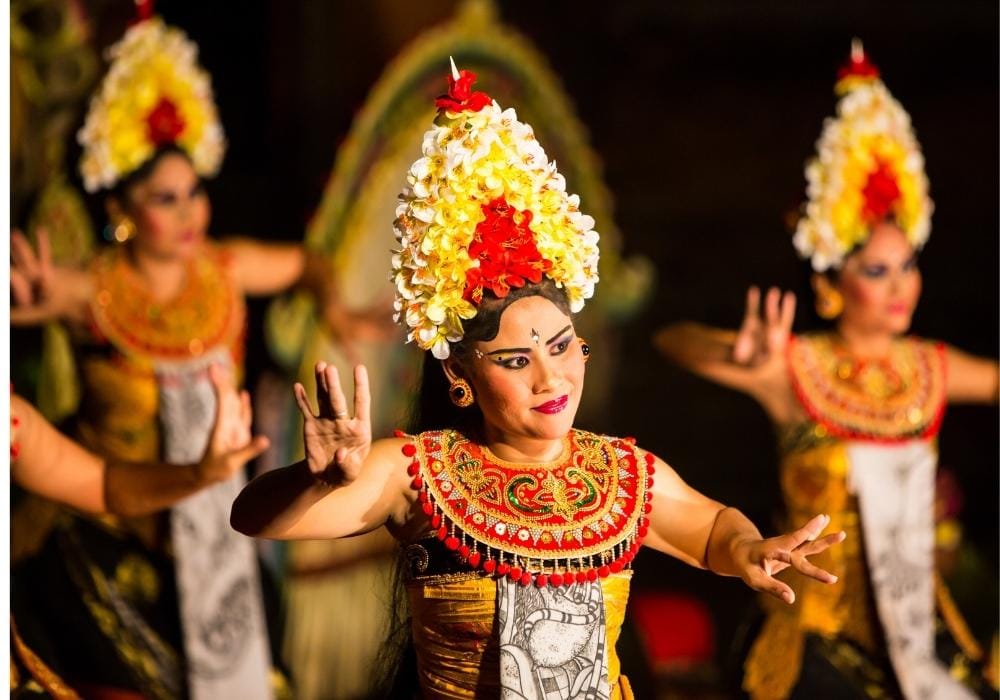
The Legong dance is known for its graceful movements and intricate finger gestures. Traditionally performed by young girls, Legong tells royal stories from ancient Javanese kingdoms.
It is considered one of the most refined forms of traditional dance in Bali.
3. Kecak Dance
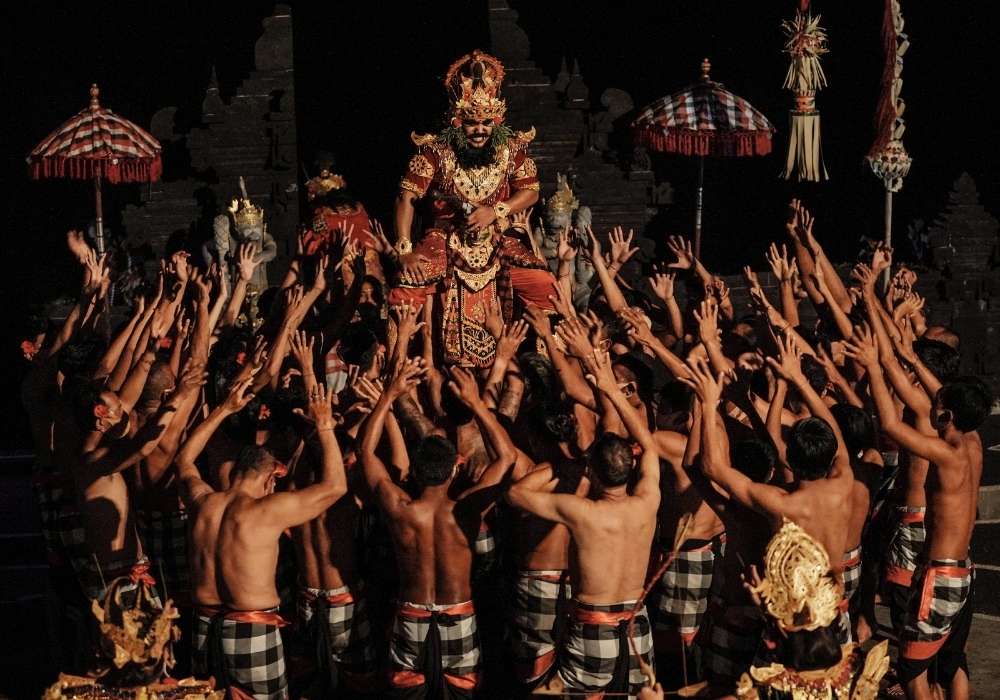
The Kecak Dance is unique because it does not use gamelan instruments. Instead, dozens of men chant “cak-cak-cak” rhythmically.
Kecak usually tells the story of the Ramayana and is famously performed at Uluwatu Temple during sunset.
4. Pendet Dance
The Pendet dance was originally a sacred temple dance but later adapted as a welcoming dance for guests.
Today, it is often performed at cultural events and hotels across Bali.
Cultural Meaning Behind Bali Traditional Dance
Every gesture in balinese dance has symbolic meaning. The eye movements, hand gestures, and body posture reflect devotion, respect, and storytelling.
Balinese dance performance is accompanied by gamelan music, which creates a spiritual atmosphere. Costumes are colorful and detailed, representing gods, kings, demons, and mythological creatures.
For the Balinese people, dance is not just art — it is a way of life. Children often start learning sacred dance in Bali from a very young age as part of their cultural education.
Barong Dance
Legong Dance
Where to Watch Bali Dance
If you want to experience authentic Bali cultural dance, here are some recommended areas:
Ubud – Cultural center with daily performances
Uluwatu Temple – Famous sunset Kecak dance
Denpasar – Traditional performances during temple festivals
Most performances start around 6:00–7:00 PM. Ticket prices usually range between IDR 100,000 – 150,000 per person.
If you are planning to visit several cultural spots in one day, hiring a private driver will make your trip easier and more comfortable.
👉 For a comfortable cultural trip, you can check our Bali Private Driver Service here:
https://privatedriverbali.com/
With an experienced English-speaking driver, you can explore temples, watch Balinese traditional dance performances, and learn more about local culture in one smooth itinerary.
Why You Should Watch Bali Traditional Dance
Watching bali dance is more than just entertainment. It allows you to:
Understand Balinese Hindu culture
Experience authentic local traditions
Enjoy unique storytelling through movement
Capture beautiful cultural photography
For travelers interested in culture, this is one of the most meaningful activities in Bali.
Conclusion
Balinese dance reflects the heart and soul of the island. From the dramatic Barong dance to the hypnotic Kecak performance, each dance carries history, spirituality, and artistic beauty.
Whether you watch it in Ubud or at Uluwatu Temple during sunset, experiencing traditional dance in Bali will give you a deeper appreciation of Balinese culture.
If you would like a customized cultural tour including Bali traditional dance performances, feel free to contact us via WhatsApp for easy booking and flexible itinerary.