Bali Temple Dress Code: What to Wear Before Visiting Any Temple
Visiting a Balinese temple is one of the most memorable experiences you can have during your holiday. Whether you plan to explore the breathtaking cliffs of Uluwatu Temple, admire the peaceful atmosphere of Tirta Empul, or capture stunning photos at Lempuyang Temple, understanding the Bali Temple Dress Code is essential.
Balinese temples are sacred places where locals perform daily prayers, ceremonies, and religious rituals. Wearing appropriate clothing is not only a sign of respect but also a requirement for entering most temples across the island.
Fortunately, following the temple dress code is easy. In this guide, you’ll learn exactly what to wear, what to avoid, when a sarong is required, and additional etiquette tips to ensure your visit is respectful and enjoyable.
If you’re planning to visit several temples in one day, hiring a professional Bali Private Driver can make your journey more comfortable while allowing you to explore Bali at your own pace.
Why the Bali Temple Dress Code Is Important
The Bali Temple Dress Code reflects the deep spiritual traditions of Balinese Hindu culture. Temples are not tourist attractions alone—they are active places of worship where ceremonies are held almost every day.
The dress code serves several important purposes:
- Shows respect to local customs
- Preserves the sacred atmosphere
- Maintains cultural traditions
- Helps visitors understand Balinese values
- Creates a respectful environment for worshippers
Many travelers are surprised by how welcoming Balinese people are, especially when visitors make an effort to respect local traditions.
Bali Temple Dress Code Essentials
In general, the dress code is simple and easy to follow.
Clothing Requirements
Visitors should wear clothing that covers:
- Shoulders
- Chest
- Midriff
- Knees
Loose, comfortable clothing is recommended because Bali’s tropical climate can be warm and humid.
Suitable clothing includes:
- Long pants
- Maxi dresses
- Long skirts
- Lightweight trousers
- Shirts with sleeves
- Blouses that cover the shoulders
Natural fabrics like cotton and linen are ideal for staying cool while remaining respectful.
The Importance of Wearing a Sarong
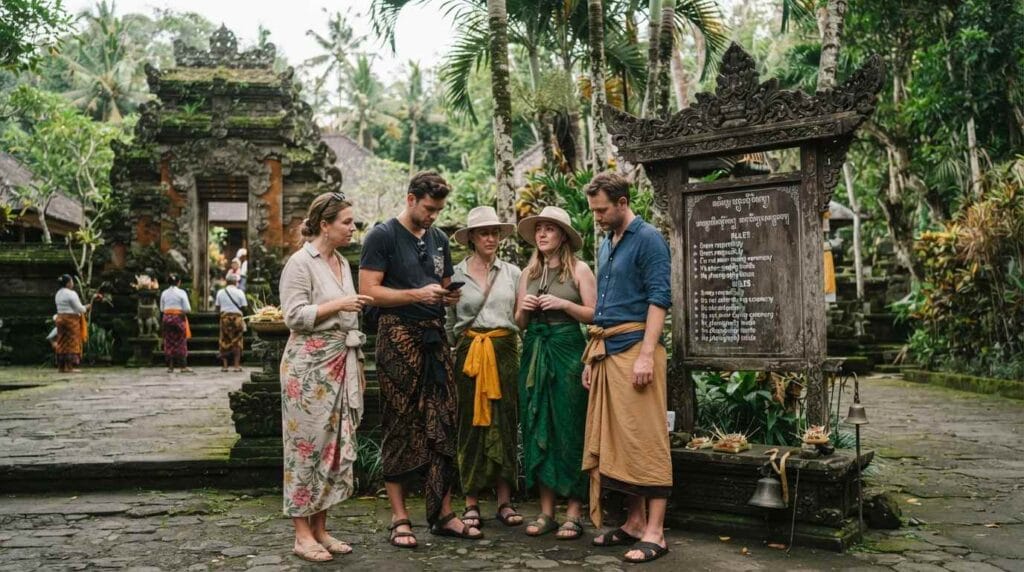
One of the most recognizable parts of the Bali Temple Dress Code is the sarong.
A sarong is a traditional cloth wrapped around the waist and legs.
Many temples provide sarongs free of charge or include them with the entrance ticket. Others rent them for a small fee.
You may also notice visitors wearing a sash around the waist. This symbolizes balance between the spiritual and physical worlds in Balinese Hindu tradition.
Popular temples where sarongs are commonly required include:
- Uluwatu Temple
- Tanah Lot Temple
- Tirta Empul Temple
- Goa Gajah
- Besakih Temple
- Lempuyang Temple
If you’re planning to visit multiple temples, bringing your own sarong can be convenient.
What Not to Wear Under the Bali Temple Dress Code
Although Bali is famous for its beaches, beachwear is not appropriate inside temples.
Avoid wearing:
- Swimwear
- Bikini tops
- Sports bras
- Very short shorts
- Mini skirts
- Transparent clothing
- Crop tops
- Clothing with offensive language
- Revealing dresses
Even if a temple provides a sarong, overly revealing tops may still prevent entry.
It’s always better to dress modestly before arriving.
Bali Temple Dress Code for Men
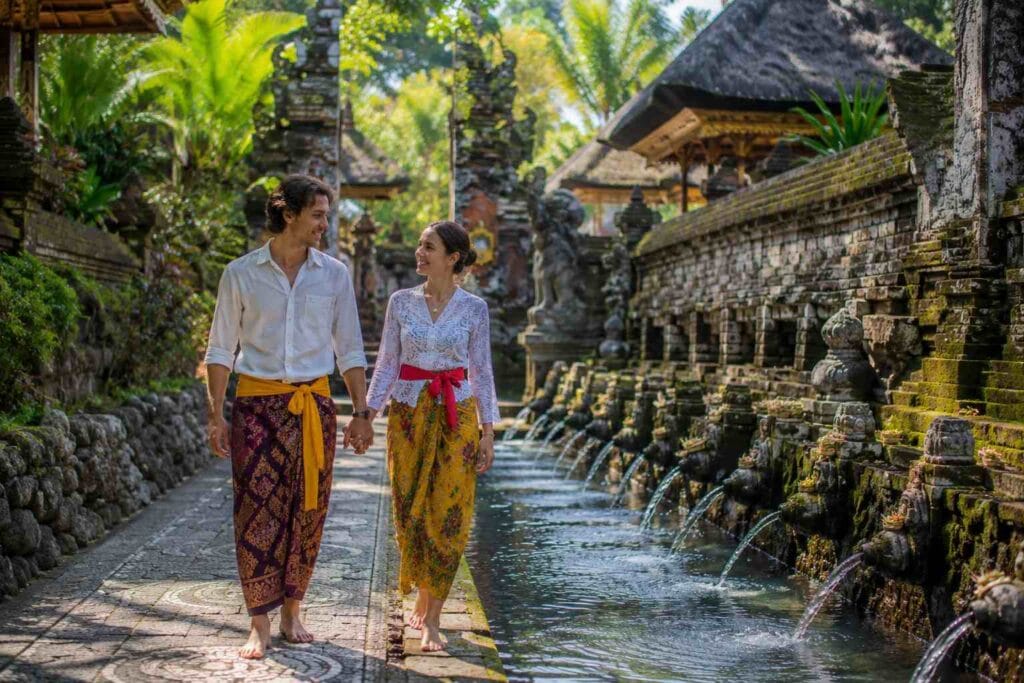
Men should wear:
- Long pants
- Sarong if required
- Shirt or T-shirt with sleeves
- Comfortable sandals or shoes
Tank tops are discouraged in many temples.
A lightweight linen shirt works well in Bali’s tropical weather while keeping you respectful.
Bali Temple Dress Code for Women
Women have several comfortable options.
Appropriate clothing includes:
- Maxi dresses
- Long skirts
- Loose trousers
- Blouses covering shoulders
- T-shirts
- Sarong when required
Avoid:
- Strapless tops
- Bikini clothing
- Short skirts
- Very tight dresses
- Transparent fabrics
Comfort and modesty are the best combination.
Visiting Temples During Religious Ceremonies
If you happen to visit during a ceremony, you’ll witness one of Bali’s most beautiful cultural experiences.
However, remember these etiquette tips:
- Keep your voice low.
- Do not interrupt prayers.
- Never walk in front of worshippers.
- Follow your guide’s instructions.
- Turn off flash photography if requested.
Respecting ceremonies makes your visit more meaningful.
Additional Temple Etiquette Beyond the Bali Temple Dress Code
Proper clothing is only one part of temple etiquette.
Visitors should also:
- Speak quietly.
- Avoid public displays of affection.
- Never climb temple structures.
- Dispose of rubbish properly.
- Ask permission before photographing people.
- Respect restricted areas.
- Follow posted signs.
Small acts of respect are always appreciated by local communities.
Can Children Visit Balinese Temples?
Yes.
Families are welcome at most temples.
Children should also follow the same dress code by wearing:
- Clothing covering the knees
- Covered shoulders
- Sarong if required
Parents should encourage children to remain quiet during ceremonies.
What Shoes Should You Wear?
Comfortable footwear is recommended.
Popular choices include:
- Walking sandals
- Comfortable sneakers
- Flat shoes
Avoid high heels, especially at temples with many stairs such as Lempuyang Temple.
Best Time to Visit Bali Temples
The best time is usually:
- Early morning
- Late afternoon
These hours offer:
- Cooler temperatures
- Softer lighting
- Smaller crowds
- Better photography opportunities
Sunrise visits are especially popular at Lempuyang Temple.
Packing Tips for Temple Visits
A small day bag can include:
- Sarong
- Reusable water bottle
- Sunscreen
- Sunglasses
- Hat
- Camera
- Portable fan
- Light rain jacket
Being prepared allows you to enjoy your temple tour comfortably.


Explore Bali’s Temples with a Private Driver
Many of Bali’s famous temples are located in different regions of the island.
Booking a private driver allows you to visit multiple temples in one day without worrying about navigation, parking, or transportation.
For example, you can combine:
- Tirta Empul
- Tegenungan Waterfall
- Ubud Monkey Forest
- Goa Gajah
Or enjoy a southern Bali itinerary including:
- Garuda Wisnu Kencana
- Uluwatu Temple
- Jimbaran Seafood Dinner
You can learn more about our Bali Private Driver services and customize your own itinerary.
If you’re arriving by cruise ship, our Benoa Port Shore Excursions are designed to help visitors explore Bali’s top cultural attractions comfortably.
Frequently Asked Questions About the Bali Temple Dress Code
Do all temples require a sarong?
Most major temples do, although some smaller village temples may have different rules.
Can I borrow a sarong?
Yes. Many temples provide sarongs at the entrance.
Can I wear jeans?
Yes. Long jeans are generally acceptable if paired with respectful clothing.
Are sandals allowed?
Yes. Comfortable sandals are perfectly fine.
Can I wear shorts with a sarong?
In many temples, shorts covered completely by a properly worn sarong are acceptable, but long trousers are generally the safest choice.
Final Thoughts
Understanding the Bali Temple Dress Code is one of the easiest ways to show respect for Bali’s rich cultural and spiritual heritage. Dressing modestly, wearing a sarong when required, and following local etiquette will help ensure a meaningful and enjoyable visit to the island’s sacred temples.
Whether you’re exploring the majestic Uluwatu Temple perched above the ocean, experiencing the holy spring waters of Tirta Empul, or capturing unforgettable sunrise views at Lempuyang Temple, respecting local customs enhances your travel experience.
For official travel advice and cultural information before your trip, you can also visit the Indonesia Travel website: https://www.indonesia.travel
By planning ahead and choosing appropriate clothing, you’ll not only gain access to Bali’s most iconic temples but also leave with a deeper appreciation of the island’s unique traditions and welcoming culture.