

Bali Laws for Tourists: Driving, Drugs, Dress Code and More
Bali Laws for Tourists are important to understand before visiting the island, especially if you plan to drive a scooter, visit temples, or explore Bali independently. While Bali is famous for its relaxed atmosphere, tourists are still required to follow Indonesian laws and respect local customs. Knowing the basic rules can help you avoid unnecessary problems and enjoy a safer, more comfortable holiday.
You do not need to memorize every Indonesian law before visiting Bali. However, understanding the rules that commonly affect tourists can make your trip safer and more enjoyable.
If you are planning your first trip to the island, you may also want to read our guide to Bali travel tips before arriving.
Bali Laws for Tourists and Indonesian Law
Bali is part of Indonesia, so tourists are subject to Indonesian national law as well as local regulations. Being on holiday does not provide an exemption from Indonesian law.
Some rules may feel stricter than those in your home country. This is particularly important when it comes to drugs, driving, immigration, and public behavior.
Respect Indonesian laws while visiting Bali
Foreign visitors are expected to carry valid travel documents and follow Indonesian immigration requirements. Your passport should be kept safely during your trip, and you should make sure your visa or stay permit is valid for the entire period of your visit.
It is also important to follow instructions from local authorities. If you are unsure about a specific legal requirement, check official information before making assumptions based on advice from social media or other travelers.
For official information about weather conditions and warnings that could affect your travel plans, you can also check BMKG.
Bali Laws for Tourists About Driving
Driving is one of the most important areas for visitors to understand. Renting a scooter may look like an easy way to explore Bali, but tourists are still required to follow Indonesian traffic laws.
Bali’s roads can be busy, particularly around Canggu, Seminyak, Kuta, Ubud, and South Bali. Traffic conditions can also change quickly.
Do you need a license to drive in Bali?
Yes. Tourists should have the appropriate driving licence to legally operate a vehicle in Indonesia.
For motorcycles and scooters, having a motorcycle licence from your home country may not be enough by itself. International driving documentation may also be required depending on your circumstances.
Before renting a scooter, make sure you are legally allowed to ride it and that your travel insurance covers motorcycle use.
Wear a helmet
Helmet use is not simply a recommendation. Riders and passengers should wear properly fitted helmets when traveling by motorcycle.
Some visitors ignore helmets because they are only traveling a short distance. This can be dangerous, especially on Bali’s busy roads.
Police checks can also occur in tourist areas.
Follow traffic rules
Bali uses left-hand traffic. Visitors who normally drive on the right should take extra care when first getting behind the wheel.
Avoid:
- Driving without the required licence
- Using a phone while driving
- Driving under the influence of alcohol or drugs
- Ignoring traffic lights
- Riding without a helmet
- Carrying more passengers than legally permitted
- Driving aggressively or dangerously
If you prefer not to drive yourself, hiring a private driver in Bali can be a much easier option, especially for longer day trips.
For example, travelers planning to visit several destinations can read our Bali private driver guide to understand how private transportation works.
Bali Drug Laws Are Extremely Strict
Drug laws are one of the most important things tourists need to understand before traveling to Bali.
Indonesia has very strict laws regarding illegal drugs. Possession, use, distribution, and trafficking can result in serious criminal consequences.
Never carry illegal drugs
Do not bring recreational drugs into Bali, even if they are legal or tolerated in your home country.
This includes substances that may be legal elsewhere. Indonesian law applies once you enter Indonesia.
Do not accept packages from strangers, carry luggage for someone you do not know, or agree to transport an unknown substance through an airport.
Be careful with prescription medication
If you regularly take prescription medication, check the requirements before traveling.
Some medicines that are commonly available or permitted in other countries may be regulated differently in Indonesia.
Keep prescription medication in its original packaging and carry supporting documentation when appropriate. If you are unsure, check with the relevant Indonesian authorities before traveling.
Drug-related offenses can have extremely serious consequences, so this is one area where tourists should never rely on casual advice from other travelers.
Bali Laws for Tourists and Temple Dress Codes
Bali is famous for its Hindu temples, and many visitors want to experience these cultural sites during their holiday.
Although tourists are welcome at many temples, visitors are expected to dress and behave respectfully.
Wear appropriate clothing
When entering a temple or other sacred location, visitors should generally cover their shoulders and knees.
A sarong may be required at certain temples. Some attractions provide one for visitors, while others expect guests to bring or rent one.
Beachwear, very short clothing, and revealing outfits are not appropriate inside sacred areas.
This is particularly important because Balinese temples are not simply tourist attractions. They remain active places of worship.
Follow temple instructions
Pay attention to signs and instructions from temple staff or local guides.
Some areas may be restricted to worshippers, while certain ceremonies may have specific rules for visitors.
Avoid climbing on sacred structures, touching religious objects without permission, or entering restricted areas simply to take a photograph.
Bali Laws for Tourists and Religious Ceremonies
During your holiday, you may see religious ceremonies taking place on roads, beaches, temples, or in villages.
These ceremonies are an important part of everyday Balinese life.
Be respectful when watching ceremonies
You can often watch and photograph ceremonies, but do so respectfully.
Avoid walking directly in front of people who are praying. Do not interrupt a ceremony to take photographs, and follow any instructions given by local people.
If a road is temporarily closed because of a ceremony, be patient. Traffic disruptions are sometimes unavoidable during major religious events.
A private driver familiar with local areas can also help visitors understand when a ceremony or road closure may affect their itinerary.
Can Tourists Enter Temples During Menstruation?
You may see signs at some Balinese temples stating that women who are menstruating should not enter.
This is a religious and cultural rule rather than something tourists should debate or challenge.
Rules can vary between temples, so visitors should follow the instructions displayed at each location.
If you are unsure, ask your guide or temple staff politely before entering.
Respecting local traditions is one of the easiest ways to have a positive experience in Bali.
Bali Laws for Tourists About Littering
Bali has increased efforts to protect the island from pollution and waste.
Tourists should not throw rubbish on roads, beaches, rivers, temples, or other public areas.
Avoid single-use plastic where possible
Visitors are encouraged to reduce plastic waste during their stay.
Carry a reusable water bottle, use designated rubbish bins, and avoid leaving food packaging behind at beaches or tourist attractions.
Do not assume that someone will clean up after you.
Small actions from visitors can make a significant difference, particularly in popular destinations that receive large numbers of tourists every day.
Respect Bali’s Environment
Bali’s natural attractions are one of the main reasons people visit the island.
Waterfalls, rice terraces, beaches, forests, and mountains can become crowded, especially during peak travel periods.
Stay on designated paths
When visiting natural attractions, follow marked paths and safety instructions.
Do not climb over barriers simply to take a better photograph. Some viewpoints can be dangerous, especially after rain.
At waterfalls and rivers, pay attention to weather conditions and local warnings.
For travelers planning outdoor activities, checking the weather before leaving is particularly important.
Photography and Drone Rules
Bali offers countless opportunities for photography, but visitors should remember that not everything should be photographed without permission.
Ask before photographing people
If you want to take a close-up photograph of a local person, especially during a ceremony, it is polite to ask first.
Some people may be happy to pose, while others may prefer not to be photographed.
Be careful with drones
Drone regulations can apply in Indonesia, particularly around airports, government facilities, military areas, and other restricted locations.
Tourists should check the current rules before flying a drone.
Never assume that an attractive location is automatically legal for drone flights.
Bali Laws for Tourists and Alcohol
Alcohol is available in many tourist areas of Bali, particularly around Seminyak, Canggu, Kuta, Uluwatu, and other popular destinations.
However, visitors should still behave responsibly.
Do not drink and drive
Drinking alcohol and then driving a motorcycle or car can put you and other road users at risk.
If you plan to drink, use a taxi, ride service, or private driver rather than driving yourself.
This is especially important at night when roads may have limited lighting and traffic conditions can be unpredictable.
Public Behavior and Respect for Local Culture
Bali is generally welcoming to tourists, but visitors are expected to behave respectfully.
Avoid aggressive behavior, public disturbances, vandalism, or disrespectful actions toward religious places.
Social media trends should also not be an excuse to ignore local rules.
A photograph or video that looks funny online may be considered offensive or disrespectful by local residents.
Be respectful in villages
When visiting traditional villages, remember that people live and work there.
Avoid entering private properties without permission, taking photographs through people’s windows, or treating residential areas like a theme park.
A little respect goes a long way.
Bali Laws for Tourists and Immigration Rules
Immigration rules are another important part of your trip.
Make sure your passport meets the current entry requirements and that your visa or visa-free arrangement applies to your nationality and travel purpose.
Do not overstay your permitted period.
Check your visa before traveling
Visa requirements can change, so tourists should check the latest information from official Indonesian immigration sources before booking or starting their trip.
Do not rely entirely on information from an old blog post because immigration policies can change.
If you are planning a longer stay, make sure you understand the conditions attached to your visa.

Common Mistakes Tourists Should Avoid
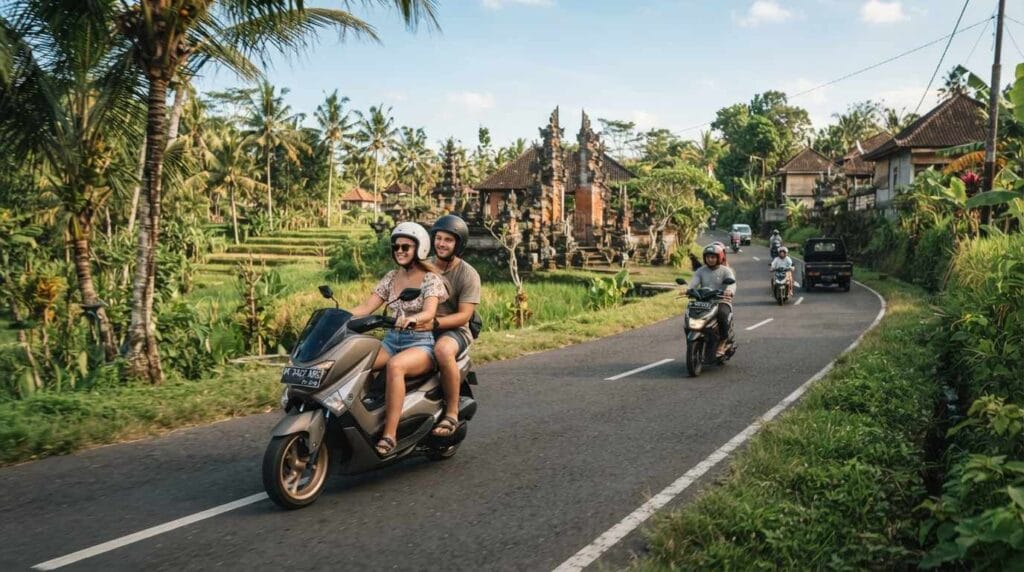
Understanding Bali Laws for Tourists is not only about avoiding criminal offenses. It is also about understanding local expectations.
Some common mistakes include:
- Riding a scooter without the correct licence
- Not wearing a helmet
- Entering temples without appropriate clothing
- Walking into restricted temple areas
- Taking disrespectful photographs
- Leaving rubbish at tourist attractions
- Driving after drinking alcohol
- Carrying unknown packages across borders
- Bringing restricted medication without checking requirements
- Overstaying a visa
- Ignoring signs and instructions at attractions
Most of these problems can easily be avoided with a little preparation.
A Safer Way to Travel Around Bali
For visitors who are unfamiliar with Indonesian traffic, hiring a private driver can make sightseeing more comfortable.
A local driver can help with transportation between destinations, parking, busy roads, and changes to the itinerary caused by traffic or local events.
This can be especially useful for families, older travelers, and groups visiting several destinations in one day.
If you are planning airport transportation, you can also see our Bali airport transfer service for information about private airport pickup and drop-off.
For longer sightseeing days, you may also be interested in our Bali tour packages, which can be customized around your preferred destinations.
Final Thoughts on Bali Laws for Tourists
Understanding the basic Bali Laws for Tourists can make your holiday much easier. You do not need to worry about every possible rule, but you should take important areas such as driving, drugs, immigration, temple etiquette, and public behavior seriously.
The most important thing is to remember that Bali is not only a holiday destination. It is also home to millions of people with their own traditions, religious practices, and community rules.
Travel responsibly, respect local culture, follow Indonesian laws, and ask when you are unsure.
With a little preparation, you can enjoy Bali’s beaches, temples, waterfalls, rice terraces, food, and culture while helping keep the island welcoming for future visitors.