Bali Asian Cuisine: 15 Indonesian and Balinese Foods to Discover
Bali is famous for its beaches, temples, rice terraces, and beautiful landscapes. However, the island also offers a fascinating food culture that deserves to be part of your travel experience. Bali Asian Cuisine combines traditional Balinese recipes with wider Indonesian influences, creating dishes that are rich in spices, herbs, textures, and local ingredients.
From small family-run warungs to traditional markets, visitors can find many authentic foods that are different from the typical international dishes served in tourist areas. Moreover, trying local food is one of the easiest ways to experience another side of Balinese culture.
If you are planning your first trip to the island, exploring Bali Asian Cuisine can also make your journey more memorable. You can enjoy a traditional breakfast, stop at a local market, or ask your private driver to take you to a genuine local warung along your sightseeing route.
In this guide, we introduce 15 Indonesian and Balinese foods to discover in Bali, including traditional dishes, popular snacks, spicy sambals, and local dining experiences.
Why Bali Asian Cuisine Is Worth Discovering
Bali Asian Cuisine is closely connected with the island’s traditions and everyday lifestyle. Many recipes use ingredients such as turmeric, ginger, galangal, lemongrass, chili, coconut, shallots, garlic, and aromatic herbs.
Unlike some international cuisines, Balinese food often combines several flavors in one meal. You may notice spicy, salty, sweet, sour, and aromatic flavors appearing together.
In addition, food is often connected with ceremonies and community traditions. Some dishes are prepared for religious celebrations, family gatherings, and important cultural occasions.
For travelers, this means that eating in Bali can be more than simply finding something delicious. It can also be an opportunity to understand local ingredients, cooking traditions, and Balinese daily life.
If you are interested in combining sightseeing with local experiences, you can also arrange a trip with a Bali private driver and ask your driver to include local food stops along the way.
15 Bali Asian Cuisine Foods to Discover
1. Babi Guling
Babi guling is one of the most famous traditional foods in Bali. The dish consists of a whole pig roasted slowly on a spit and traditionally prepared with a mixture of Balinese spices.
The spice paste can include turmeric, ginger, garlic, shallots, chili, coriander, and other aromatic ingredients. The result is crispy skin and tender meat with a strong, fragrant flavor.
Traditionally, babi guling has an important connection with Balinese ceremonies and celebrations. Today, however, visitors can also find restaurants and local warungs serving it as an everyday meal.
If you eat pork, trying authentic babi guling is an important part of discovering Bali Asian Cuisine.
2. Ayam Betutu
Ayam betutu is another iconic Balinese dish. Chicken is cooked slowly with a rich spice mixture until the meat becomes tender and absorbs the flavors.
The spice blend usually contains ingredients such as chili, turmeric, shallots, garlic, ginger, galangal, and lemongrass.
Because the chicken is slowly cooked, the flavor can be deep and aromatic. Some versions are quite spicy, so it is worth asking about the level of chili before ordering.
Ayam betutu is especially associated with Bali and is available in restaurants as well as traditional local eateries.
3. Sate Lilit
Sate lilit offers a different style of Indonesian satay. Instead of placing pieces of meat directly onto a skewer, minced meat is mixed with spices and wrapped around a bamboo stick.
Fish is commonly used, although chicken, pork, and other meats can also be found depending on the restaurant.
The mixture is usually combined with coconut and aromatic Balinese spices before being grilled over charcoal. As a result, sate lilit has a distinctive smoky and fragrant taste.
For visitors who want to sample several flavors in one meal, sate lilit is an easy introduction to Bali Asian Cuisine.
4. Lawar
Lawar is a traditional Balinese dish made from a combination of vegetables, coconut, herbs, spices, and meat or other ingredients depending on the variety.
There are many regional and family recipes, so the exact ingredients can vary considerably.
Some versions use green beans, grated coconut, minced meat, and a traditional spice mixture. Lawar is often served as a side dish with rice and other Balinese foods.
Because recipes differ between communities, trying lawar in different locations can reveal interesting variations in Balinese food culture.
5. Nasi Campur Bali
Nasi campur Bali is an excellent choice if you want to try several local foods at once.
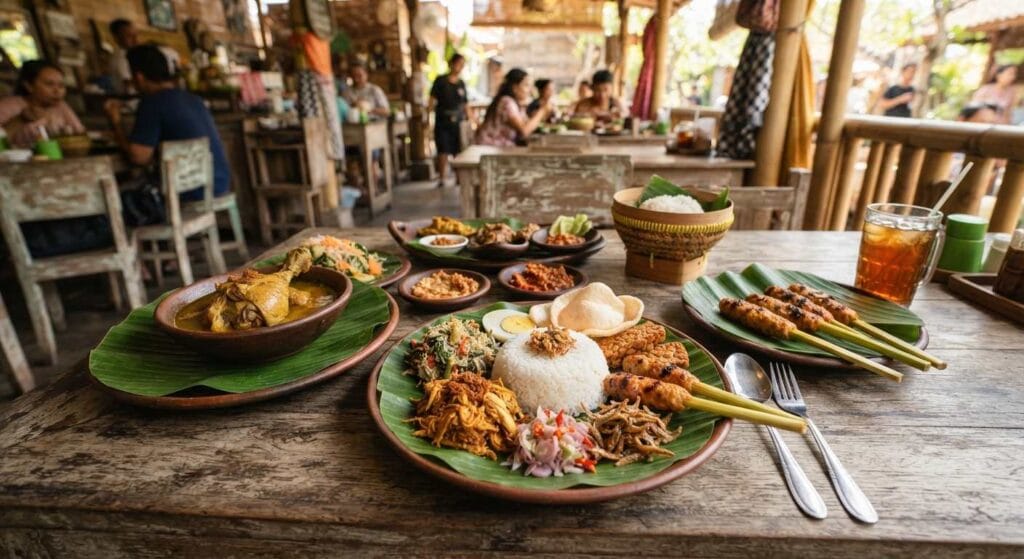
A typical plate includes steamed rice surrounded by small portions of different side dishes. Depending on the restaurant, you might receive chicken, vegetables, sate lilit, lawar, eggs, sambal, and other local specialties.
The combination makes nasi campur particularly convenient for travelers who are not sure which individual dish to order.
Furthermore, local warungs often have their own style of nasi campur, so the experience can vary from one place to another.
6. Sambal Matah
For people who enjoy spicy food, sambal matah is one of Bali’s most recognizable condiments.
Unlike cooked sambals, sambal matah is a fresh mixture commonly made with sliced shallots, lemongrass, chili, lime, and coconut oil.
The ingredients create a combination of spicy, fresh, citrusy, and aromatic flavors.
It is often served with grilled meat, chicken, seafood, or rice. Even a simple meal can taste completely different after adding a spoonful of sambal matah.
If you are exploring Bali Asian Cuisine, this fresh sambal is definitely worth trying.
7. Tum
Tum is a traditional Indonesian and Balinese preparation in which seasoned ingredients are wrapped in banana leaves and steamed.
Chicken, fish, vegetables, or other ingredients can be used depending on the recipe.
The banana leaf helps retain moisture while the spices infuse the ingredients during steaming.
When served, tum has a fragrant aroma and soft texture. It is also a good example of how traditional cooking methods can make use of simple natural materials.
8. Pepes
Pepes is another Indonesian dish that uses banana leaves as part of the cooking process.
Fish is one of the most common ingredients, although chicken, tofu, and other foods can also be prepared this way.
The ingredients are seasoned with herbs and spices, wrapped tightly in banana leaves, and then steamed or grilled.
Because the food is enclosed during cooking, the aromas remain concentrated inside the package.
For travelers interested in Indonesian food beyond the most famous Balinese dishes, pepes is a useful addition to your food list.
9. Nasi Jinggo
Nasi jinggo is a simple Balinese meal traditionally served in a small banana-leaf package.
It usually contains a small portion of rice accompanied by several side dishes, which may include shredded chicken, noodles, vegetables, egg, and sambal.
Nasi jinggo is particularly popular as an inexpensive meal or snack and can often be found in the evening.
The small serving size also makes it perfect for travelers who want to try local food without ordering a large meal.
10. Tipat Cantok
Tipat cantok is a traditional Balinese dish combining compressed rice cakes with vegetables and peanut sauce.
The name is associated with the way the ingredients are mixed or pounded together.
The peanut sauce provides a rich, slightly sweet and savory flavor, while the vegetables add freshness and texture.
It is a good option if you prefer a lighter meal or want to explore vegetarian-friendly traditional foods.
11. Sate Plecing
Sate plecing combines grilled meat with the distinctive spicy flavor of plecing-style sambal.
The grilled meat develops a smoky exterior while the chili-based sauce adds heat and acidity.
Depending on where you eat, the dish may be served with rice or other traditional side dishes.
If you enjoy spicy Indonesian food, adding sate plecing to your list can give you another perspective on Bali Asian Cuisine.
12. Plecing Kangkung
Plecing kangkung is a popular Indonesian vegetable dish featuring water spinach served with a spicy tomato and chili sambal.
The vegetables are generally blanched or cooked before being topped with the fresh, spicy sauce.
It is simple but flavorful and works particularly well alongside grilled seafood or meat.
For travelers looking for vegetables during a trip filled with heavier dishes, plecing kangkung can be a refreshing choice.
13. Bubur Injin
Bubur injin, also known as black rice pudding, is a traditional Balinese dessert made from black glutinous rice.
The rice is slowly cooked until soft and is commonly served with coconut milk and palm sugar.
The combination creates a mildly sweet, creamy, and comforting dessert.
It is a great way to finish a traditional Balinese meal, especially if you prefer desserts that are less sweet than many Western-style options.
14. Jaje Bali
Jaje Bali refers to various traditional Balinese cakes and snacks.
These colorful treats can be made using rice flour, coconut, palm sugar, banana leaves, and other local ingredients.
Different varieties have different shapes, textures, and flavors. Some are steamed, while others are grilled or prepared with coconut.
Traditional markets are particularly interesting places to see different types of jaje Bali.
Therefore, if you want to explore the sweeter side of Bali Asian Cuisine, look for local markets during your trip.
15. Balinese Coffee
Food exploration does not have to end with a meal. Bali is also known for coffee production, particularly in highland areas such as Kintamani.
Balinese coffee is commonly enjoyed black, although modern cafés offer a wide range of preparations.
A visit to a coffee plantation can combine a tasting experience with beautiful views of plantations and surrounding landscapes.
If you are planning a day trip around Ubud, Kintamani, or other highland areas, adding a coffee stop can be an enjoyable part of your itinerary.
Bali Asian Cuisine and Traditional Local Warungs
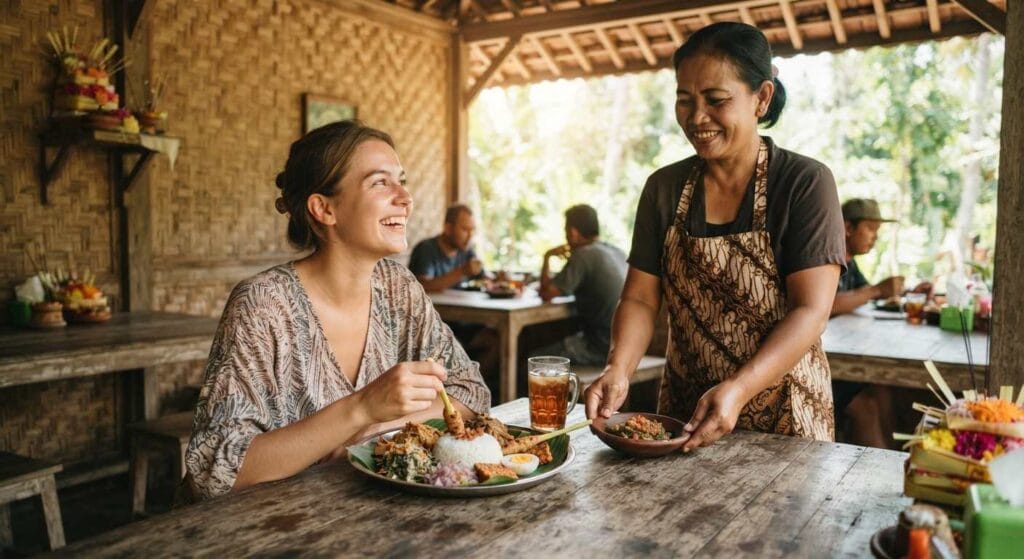
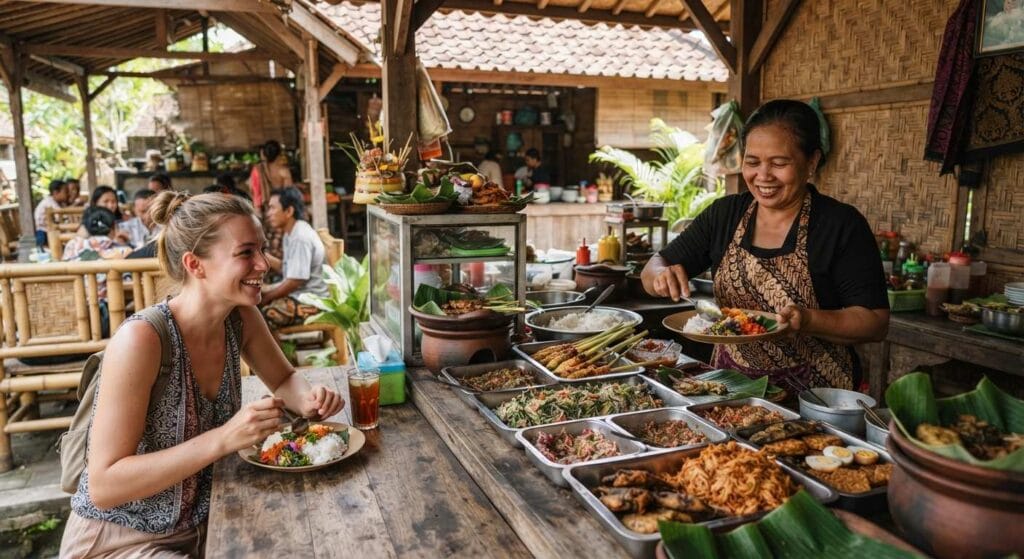
One of the best ways to experience Bali Asian Cuisine is by visiting a local warung.
A warung is generally a small local food business serving affordable meals. Some specialize in particular dishes, while others offer several options from rice and vegetables to chicken, pork, seafood, and sambal.
The atmosphere can be much more casual than a modern restaurant. You may see local residents eating lunch, families having dinner, or workers stopping for a quick meal.
However, standards and menus vary between establishments. If you have dietary restrictions or allergies, always ask about the ingredients before ordering.
Bali Asian Cuisine at Traditional Markets
Traditional markets provide another opportunity to explore Balinese food culture.
Markets often sell fresh vegetables, fruits, spices, snacks, rice cakes, coconut products, and prepared foods.
Visiting early in the morning can be particularly interesting because this is when many locals shop for ingredients.
You can also discover foods that may not appear on restaurant menus. In addition, markets provide a chance to see how local ingredients are used in everyday Balinese cooking.
For official information about Indonesian destinations and travel inspiration, you can also visit Indonesia Travel.
How to Experience Bali Asian Cuisine During Your Trip
You do not need to spend your entire vacation searching for restaurants. Instead, you can include local food stops in your sightseeing itinerary.
For example, a day trip to Ubud could include a traditional lunch before visiting rice terraces and cultural attractions. Similarly, an East Bali itinerary could include a local warung between visits to temples and scenic locations.
If you are staying in Canggu, Seminyak, Kuta, or Ubud, a private driver can also make it easier to visit less touristy areas.
You can learn more about arranging a Canggu private driver if your accommodation is around Canggu.
For visitors staying in Ubud, combining sightseeing with local food stops can also be convenient. See our Ubud private driver tour for more information.
Tips for Trying Bali Asian Cuisine
Start With Familiar Flavors
If you are new to Indonesian food, begin with nasi campur, sate lilit, or grilled chicken. These dishes can provide an easy introduction to local flavors.
Ask About Spicy Food
Many Balinese dishes use chili. If you are sensitive to spicy food, ask the restaurant to reduce the chili or serve sambal separately.
Eat Where Locals Eat
Busy local warungs can be a good place to observe everyday food culture. However, always consider basic hygiene and choose food that appears freshly prepared.
Try Small Portions
Rather than ordering one large dish, consider sharing several dishes with your travel companions. This lets you experience more of the flavors of Bali Asian Cuisine.
Visit a Traditional Market
Markets can introduce you to local snacks, fruits, desserts, and ingredients that you might otherwise miss.
Tell Your Driver What You Want
If food is an important part of your trip, tell your private driver in advance. Your driver may be able to suggest local areas or help fit food stops naturally into your itinerary.
Best Places to Explore Bali Asian Cuisine
Different parts of Bali offer different food experiences.
Ubud is ideal for combining traditional food with cultural attractions, rice terraces, art villages, and local markets.
Denpasar offers a more everyday urban experience, with many local food stalls and traditional markets.
East Bali is interesting for travelers who want to combine food with temples, countryside, and traditional villages.
North Bali provides opportunities to combine local food with waterfalls, plantations, mountains, and quieter villages.
Meanwhile, Seminyak, Canggu, and Kuta have a much wider selection of international restaurants, but you can still find Indonesian and Balinese dishes alongside modern dining options.
Plan a Food and Culture Day in Bali
A food-focused day does not have to mean visiting restaurants all day. Instead, you can combine several experiences.
For example, start with a local breakfast, visit a traditional market, explore a cultural attraction, stop for a Balinese lunch, and finish the afternoon at a coffee plantation.
This type of itinerary allows you to experience food together with the landscapes and traditions that make Bali unique.
With a private car and driver, you can also adjust the route according to your interests rather than following a fixed group-tour schedule.
If you would like help creating a customized itinerary that combines sightseeing and local food, contact Bali Private Driver to discuss your preferred destinations and travel schedule.
Final Thoughts on Bali Asian Cuisine
Exploring Bali Asian Cuisine is a simple way to experience another side of the island. Beyond beaches and temples, Bali offers traditional recipes that reflect local ingredients, family traditions, ceremonies, and everyday life.
From babi guling and ayam betutu to sate lilit, lawar, nasi campur, sambal matah, traditional cakes, and Balinese coffee, there are plenty of flavors to discover.
Most importantly, do not be afraid to try something unfamiliar. Ask about the ingredients, share different dishes with your companions, and take the opportunity to eat where local communities enjoy their everyday meals.
Whether you are visiting Bali for the first time or returning for another holiday, adding local food experiences to your itinerary can make your trip more memorable.
Ready to explore Bali through food and culture? Contact us to arrange a private driver and create a flexible Bali itinerary with local food stops along the way.